
Reviewed · AMSTERDAM WALKING TOURS
Absolutely Amsterdam – the Essential Introductory Walking Tour
Amsterdam makes more sense when you see its old streets as a working city, not just a postcard of canals and gabled houses. This 10-stop walk ties water, commerce, religion, prostitution and cycling into one useful introduction, with stories that explain why the city developed as it did.
I like two things in particular: the route connects famous sights to the choices that shaped them, and the guides use humor, maps and visual aids to make history easy to follow. At $5.93 per person, the listed price is unusually low, with the option to tip according to the value you feel you received.
One consideration: this is a compact, information-filled walk through a busy center, not a leisurely canal-side wander. You will cover several neighborhoods on foot, so wear comfortable shoes, keep an eye out for bikes and expect crowds at popular times.
What you get from this Amsterdam walk

- A city story told through 10 stops: The route links the old harbor, the former Jewish Quarter, the Amstel and Dam Square.
- History with present-day relevance: Topics include religious tolerance, prostitution, drug policy, cycling and the legacy of the Dutch trading empire.
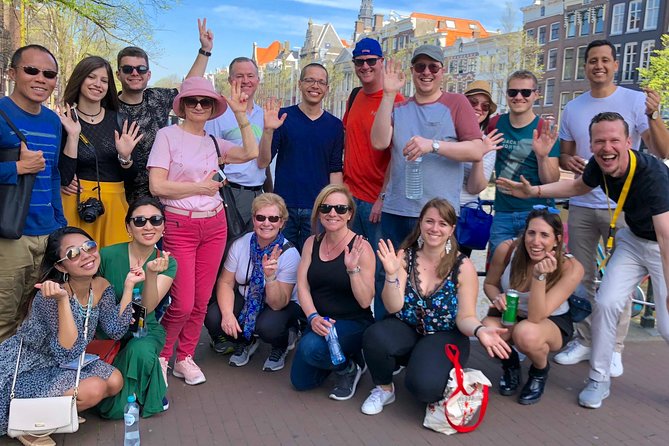
- A small group: The maximum is 15 people, which can make it easier to hear the guide and ask questions.
- A modest listed price: The tour costs $5.93 per person, and you can tip as much as you like.
- A practical first-day orientation: The walk offers a broad overview and ideas for places to revisit on your own.
From the Beursplein to Amsterdam’s beginnings
The meeting point is Freedam Tours at Beursplein 5, in front of the Beurs van Berlage. This is a fitting place to begin: the guide uses the old stock and commodities exchange to explain how Amsterdam grew where the Amstel once flowed, and how water and finance helped define the city.
You get about 20 minutes here, enough to establish the central theme of the tour: Amsterdam’s character grew from its relationship with water and its knack for trade. The building is a useful landmark, but the value lies in the context rather than an interior visit.
From there, the walk heads toward Damrak, once part of the old harbor. Here the guide connects the Red Light District to the Church and explains how religious authority and commercial interests have sometimes coexisted in unexpected ways. The discussion follows prostitution through the 20th and 21st centuries, including how it became a legal profession and what challenges the neighborhood faces today.
That is a more useful introduction than a quick look at the district’s shop windows. The subject is handled as part of Amsterdam’s social and economic history, not as a spectacle. If you are visiting with children or prefer not to discuss adult topics, keep in mind that prostitution is a central theme at this stop.
More walking tours in Amsterdam:
- Anne Frank’s Story – Guided Walking Tour through Amsterdam
★ 5.0 · 11,619 reviews - Amsterdam: Life of Anne Frank and World War II Walking Tour
★ 4.8 · 10,467 reviews - Amsterdam: Anne Frank Guided Small Group Walking Tour
★ 4.8 · 2,722 reviews
The hidden church and Amsterdam’s complicated tolerance
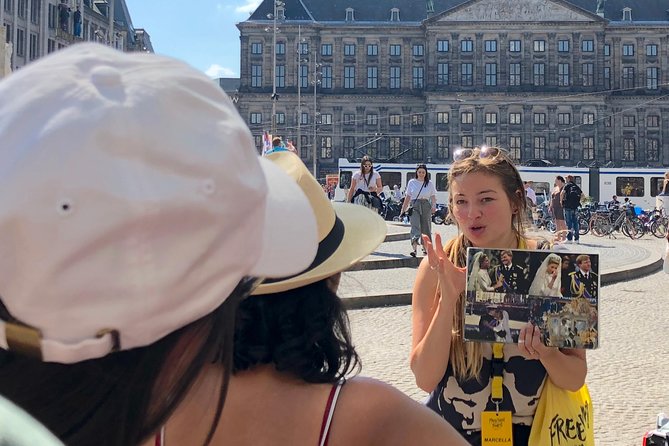
At Our Lord in the Attic Museum, the guide explains how Catholics continued to worship after Catholicism became illegal in the 17th century. The arrangement depended on a particular form of tolerance: private religious practice could continue under specific conditions, even when public Catholic worship could not.
You do not enter the hidden church on this walk. Instead, you see the museum from outside, and the guide has pictures of the interior to help explain what lies within. That makes this a story stop, not a substitute for visiting the museum itself. If the church interests you, plan a separate visit.
The conversation also draws a line between historical tolerance and what the idea means today. That present-day connection gives the stop more purpose than a date-and-fact lesson, though the tour cannot explore every side of the subject in 15 minutes.
Chinatown, drug policy and the city’s changing rules
The Chinatown stop turns to Dutch drug policy and the area’s troubled period in the 1970s. The guide explains how conditions there helped spark the development of coffeeshops devoted to selling marijuana.
This is a useful stop for anyone who has wondered how Amsterdam’s current reputation took shape. Rather than treating coffeeshops as a tourist curiosity, the walk places them within a local history of policy and neighborhood change. You should expect an overview, not a detailed account of every law or current rule.
The stop is free to visit, as are most of the places on the route. The experience is built around the guide’s explanation and the streets themselves, rather than paid admission or time inside museums.
The Waag and a new way of painting people
At the Waag, the guide connects the building with Rembrandt’s first major work and explains how the painting changed portrait-making. A copy of the painting helps you see the details being discussed, a simple but effective aid when you are standing outdoors with a group.
You spend about 10 minutes here. The short stop gives you a clear link between Amsterdam’s built environment and its art, though it is not an art tour and does not include a museum visit. The useful part is the story: the guide helps you understand why a painting mattered, rather than asking you to admire it without context.
A few more Amsterdam options worth a look
- Amsterdam: Van Gogh Museum Ticket
★ 4.7 · 52,054 reviews - Amsterdam Classic Saloon Boat Cruise with Drinks and Cheese
★ 5.0 · 31,825 reviews - Amsterdam Luxury Canal Cruise + Unlimited Drinks & Bites option
★ 5.0 · 30,518 reviews - Amsterdam: Heineken Experience Ticket
★ 4.6 · 30,055 reviews
A courtyard, a trading empire and its costs
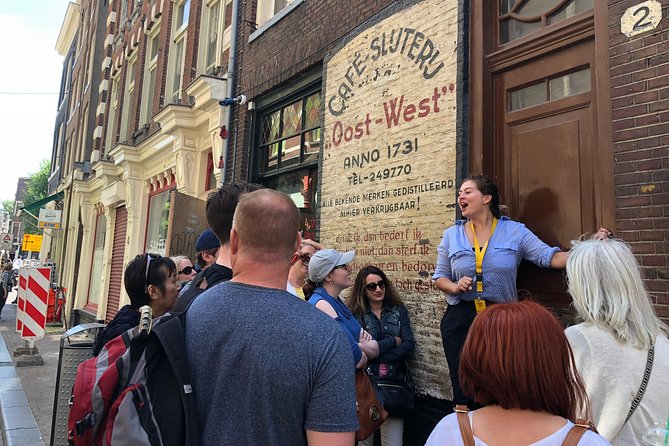
The Oostindisch Huis stop takes the tour into the story of the Dutch East India Company, whose headquarters were in this building. On weekdays, the guide can take the group into a 17th-century courtyard hidden inside. The setting helps make the company’s scale and influence feel less abstract.
The guide explains how Amsterdam became a global trading center and one of the wealthiest cities of the 17th century. The account also addresses the darker legacy of that period, rather than presenting the so-called Golden Age as unblemished prosperity. That balance matters: trade created wealth, but it also came with human costs that deserve attention.
Courtyard access is only available on weekdays. If you take the tour on another day, you can still hear the story, but should not count on seeing the courtyard. The stop lasts about 15 minutes, so it is a concise introduction rather than a full examination of the company’s history.
Waterlooplein and the wartime history of the Jewish Quarter
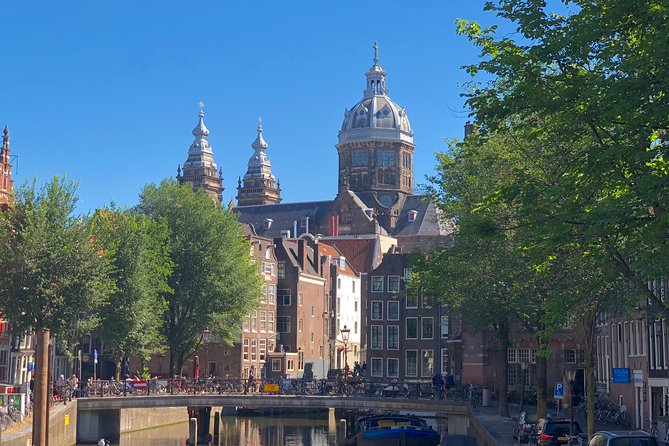
At Waterlooplein Market, the guide discusses Amsterdam’s former Jewish Quarter and the devastation of the Second World War. The market is described as the city’s oldest, but the deeper focus is what happened to the neighborhood and its residents during the Nazi occupation.
The stop covers the destruction of much of the area, the decimation of Amsterdam’s Jewish population and the struggle to survive the final hunger winter of the war. The guide also addresses the question of who and what caused the neighborhood’s destruction, rather than reducing the story to a single event.
This is one of the most serious parts of the walk. The 15-minute stop can only introduce the subject, but it gives you a historical frame for an area that might otherwise register simply as a market square. If you want to learn more, treat the tour as a starting point for further visits and reading.
The Amstel, leaning houses and Amsterdam’s everyday details
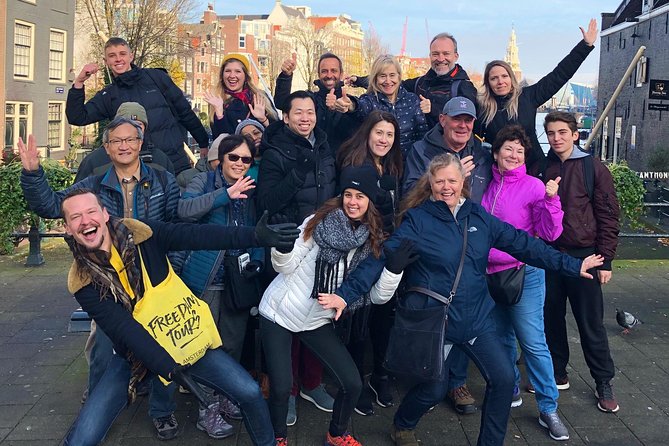
At the Amstel, or another canal depending on weather and the guide’s choice, the conversation turns to the city’s waterways and canal-house architecture. You learn why many houses are narrow, why some lean, why they have hooks and why Dutch residents are known for leaving their curtains open.
These details are enjoyable because they connect the city’s famous appearance to practical questions. The narrow houses, leaning façades and hooks are not just decorative features; the guide explains how they fit into Amsterdam’s architecture and daily life. You get around 15 minutes here, with the precise canal stop subject to conditions.
This is also a good moment to slow down and take in the streets around you. The walk is not a canal cruise, and you will not get long stretches of quiet waterfront time, but the guide’s explanations can change what you notice on the rest of your stay.
Oudemanhuispoort and the city built for bikes
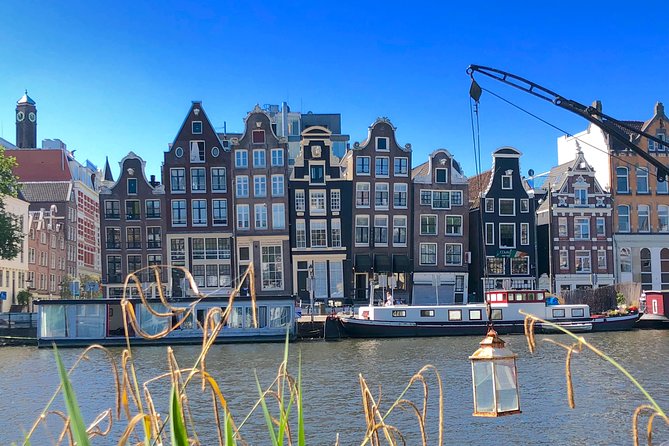
Oudemanhuispoort is a former monastery turned hospital and now part of the University of Amsterdam. In this tucked-away passage, the guide talks about Dutch cycling culture: why bikes are so numerous and why many of the city’s bicycles look more practical than pretty.
This stop gives the tour a welcome shift from centuries-old history to a daily feature of modern Amsterdam. It also offers a reminder to watch where you walk. Bikes are part of the city’s traffic, and one visitor described dodging them as a challenge; that is sound advice for the whole tour, not just this passage.
The stop lasts about 10 minutes. It is brief, but it helps explain why Amsterdam’s streets operate differently from those in many other cities. Keep to the side when the guide pauses, and stay alert when crossing or stepping into a cycle lane.
Dam Square and the route’s final stop
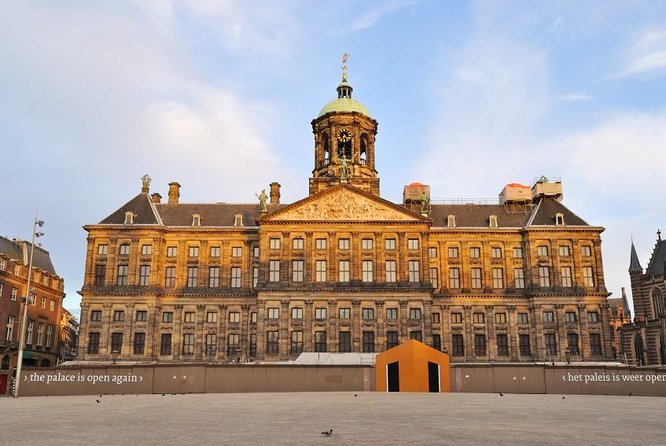
The tour’s final subject is the Royal Palace, where the guide explains how the Netherlands moved from a republic to a monarchy. You also get an introduction to the current Royal Family, with pictures and some lighter royal gossip. Dam Square is named as the end of the route in the stop details.
There is no palace admission included, and the tour is focused on the building’s history from outside. The meeting information also says the activity ends back at the starting point on Beursplein, so the exact finish point is not described consistently. Check with the guide before setting off if you have a tight onward plan.
Guides, pace and the value of a low-cost tour
The tour is offered in English, lasts about two hours and 30 minutes, and is capped at 15 people. The route’s stated stop times add up to about two hours and 25 minutes, so the overall duration is plausible, though the pace and time at each place may vary.
Guides named by people who took the tour include Jaap, Raymond, David, Sergio, Fernando, Roman, Esi, Alexander and Sebastien. The strongest recurring qualities are humor, clear storytelling and a knack for making a large amount of history feel manageable. Some guides use maps or visual aids, and the tour can include helpful local tips for places to visit later. The guide you meet will vary, so no one particular name is guaranteed.
Several people found the pace comfortable and the walk useful for getting their bearings early in a stay. Others noted that streets can be crowded, especially at busy times. You cover a lot of ground, so comfortable shoes and a drink are sensible. The group limit of 15 is a plus, but it does not remove the everyday challenge of sharing narrow streets with pedestrians and cyclists.
At $5.93 per person, the price is a very inexpensive way to get an organized introduction to central Amsterdam. The tour’s tip-as-you-like structure leaves you room to decide what the experience was worth to you. Think of the price as covering a guided overview, not entry to attractions: the hidden church, the Waag and the Royal Palace are not included as paid visits.
The tour is booked, on average, about 24 days in advance, so it is worth checking availability early if your dates are fixed. Free cancellation is available up to 24 hours before the start time; cancellations within 24 hours are not refunded. The experience requires a minimum number of participants, and if it is canceled because that minimum is not met, you are offered another date or experience, or a full refund. Service animals are allowed, and most people can participate.
Should you book Absolutely Amsterdam?
I would choose this walk if you are new to Amsterdam and want more than a list of landmark names. Its best feature is the way it links everyday details, from canal-house hooks to bicycle habits, with bigger subjects such as religious tolerance, trade and wartime history. The guides’ humor and storytelling also help keep a long run of topics lively.
It is a good fit if you like to start a visit with a broad orientation, ask questions and note places to revisit. It is less suited to you if you want museum interiors, an unhurried stroll or an in-depth treatment of any single topic. At the listed price, with a small group and a wide-ranging route, it offers strong value as an introduction. Wear comfortable shoes, watch for bikes and check the finish point if your schedule depends on it.
FAQ
How long is the walking tour?
It lasts approximately two hours and 30 minutes. The individual stops total about two hours and 25 minutes, though the pace may vary.
What language is the tour offered in?
The tour is offered in English.
Where does the tour start?
It starts at Freedam Tours, Beursplein 5, 1012 GZ Amsterdam.
Where does the tour end?
Dam Square is named as the final stop, while the meeting details say the activity ends back at the starting point. Check the finish point with the guide if you need to plan onward travel.
Does the tour enter the hidden church?
No. The group sees Our Lord in the Attic Museum from outside, and the guide has pictures of the church interior.
Is the Oostindisch Huis courtyard open during the tour?
The courtyard is accessible only on weekdays. The guide discusses the building and the Dutch trading empire, but courtyard access is not available every day.
What is the cancellation policy?
You can cancel up to 24 hours before the experience for a full refund. Cancellations made less than 24 hours before the start time are not refunded.
Added lately in Amsterdam
- Nemo Science Museum Admission★ 5.0 · 4 reviews
- Off the Beaten Paths Dutch Landscape Private Tour 1/2 day Jaguar★ 5.0 · 10 reviews
- Northern Highlights Tour: visit 4 magnificent places from Amsterdam★ 5.0 · 5 reviews
- Off the beaten paths Dutch Country Side Private Tour in Jaguar★ 5.0 · 5 reviews
- From Amsterdam: Day Trip to Rotterdam, Delft & Hague with Cruise★ 3.0 · 15 reviews
- Amsterdam : Keukenhof FlowerFarm Privatetour Skip-The-Line ticket★ 5.0 · 33 reviews
- NEMO Science Museum Amsterdam Admission Ticket★ 4.5 · 36 reviews
- Amsterdam Light Festival: Canal Cruise + Bite & Unlimited Drinks★ 4.5 · 20 reviews
Amsterdam Walking Tours, compared.

Anne Frank’s Story – Guided Walking Tour through Amsterdam
Read our review →
Life of Anne Frank and World War II Walking Tour
Read our review →

Anne Frank Walking Tour – Guided in EN/DE/IT/ES
Read our review →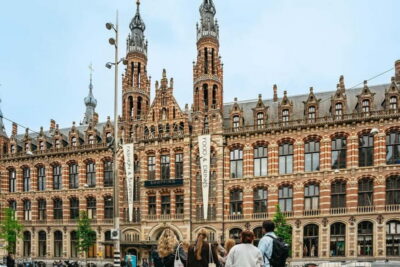

Anne Frank Walking Tour Amsterdam Including Jewish Cultural Quarter
Read our review →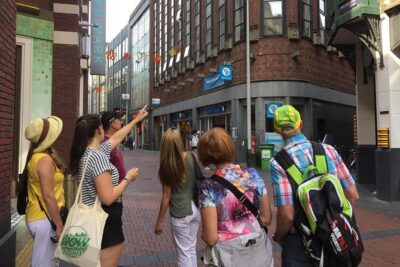
Amsterdam Highlights Walking Tour: Small Group Experience
Read our review →Browse the lists this tour appears in