
Reviewed · AMSTERDAM WALKING TOURS
Amsterdam City Center & History – Exclusive Guided Walking Tour
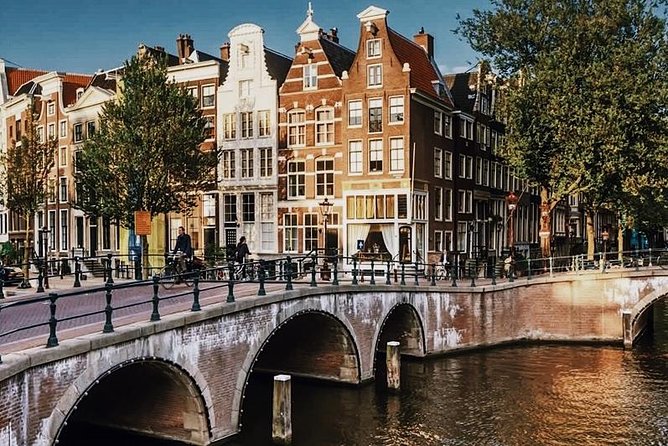
Amsterdam’s story is written into its streets: a sea dike became a trading route, a medieval gate became a weighing house, and grand canal mansions face houses built narrow to save on land tax. This 2.5-hour guided walk connects those details across the old center and the Jordaan, finishing by the canals at Papeneiland.
I like two things in particular: you get a guide’s thread through a crowded list of landmarks, and the route pairs famous places with smaller details such as the Begijnhof courtyard and carved gable stones. Guides associated with the walk include Anita, Diana and Pedro, though you cannot count on a specific guide.
One consideration: twenty stops in 150 minutes means brief pauses, not long visits. Most attractions are seen from outside, and rain does not cancel the tour, so bring an umbrella and shoes you can walk in.
At a glance
- A fast-moving route: Twenty stops fit into about two and a half hours, with most scheduled for five or ten minutes.
- History with street-level detail: See the medieval Schreierstoren, the old sea dike on Zeedijk, and the city’s narrowest houses.
- A private option: The standard private tour is for your group alone. The SAVE! BOOK SEMI-PRIVATE option does not include an exclusive guide.
- An outside-first visit: Admission is not included for several sites, and increased security means some places cannot be entered.
- A useful first-day orientation: The route crosses from the old center toward the Jordaan and ends at Papeneiland, with tips for further exploration along the way.
A city story told in twenty short stops
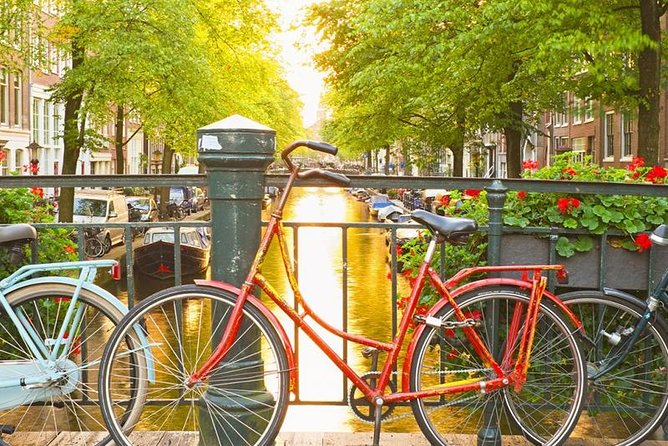
The walk starts at Prins Hendrikkade 73, near St. Nicholas Basilica, and ends at Papeneiland on Prinsengracht. Along the way, the guide moves from Amsterdam’s maritime beginnings through its trading wealth, religious history and canal architecture.
That broad sweep is the point. You are not signing up for an extended interior visit to one monument. Instead, you get a guided introduction to how different parts of the city fit together, with time to ask questions and note places you may want to revisit.
The itinerary names twenty stops, but most are allocated just five minutes. That can work well for a first orientation: your guide can explain what you are looking at, point out a feature you might otherwise miss, and keep the walk moving. It is less suitable if you want to linger, take many photographs or go inside several buildings.
More walking tours in Amsterdam:
- Anne Frank’s Story – Guided Walking Tour through Amsterdam
★ 5.0 · 11,619 reviews - Amsterdam: Life of Anne Frank and World War II Walking Tour
★ 4.8 · 10,467 reviews - Absolutely Amsterdam – the Essential Introductory Walking Tour
★ 5.0 · 3,629 reviews
From St. Nicholas to the old sea dike
St. Nicholas Basilica sets the tone near the start. Amsterdam’s primary Roman Catholic church was built in the late 19th century, after centuries when Catholic worship had been restricted. Its mix of architectural styles offers a quick introduction to a city whose religious life changed over time.
The stop is ten minutes, and admission is listed as free. That does not promise an interior visit, so think of this as a chance to learn about the church and take in its exterior unless your guide confirms otherwise.
Next comes the Schreierstoren, known as the Weeping Tower. This medieval structure is linked to women bidding farewell to loved ones leaving by ship. The story gives the tower a human angle on Amsterdam’s long connection with the water and seafaring. The listed admission is not included, so expect an outdoor stop rather than a paid visit inside.
On Zeedijk, the guide traces the street’s earlier role as a sea dike holding back the waters of the IJ. At the Kolksluis, look for the picturesque lock bridge. These are short pauses, but they help explain why the city’s streets and waterways often seem to belong to the same system.
Nieuwmarkt, the Waag and the merchants’ city
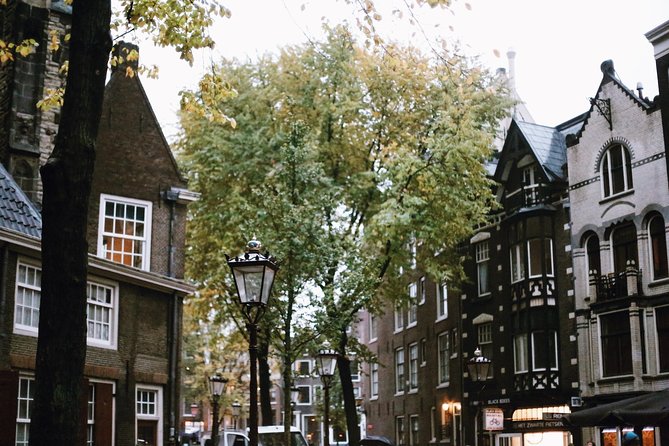
Nieuwmarkt has served as a place for commerce and social life since the 17th century. Its position just inside the old city gate made it practical for traders and shoppers seeking fresh produce. Today, it is also described as a lively nightspot, so the square’s character changes with the hour.
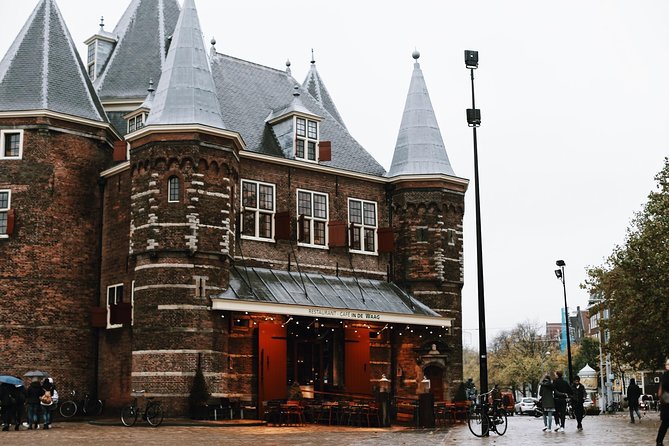
The Waag is the star here. This 15th-century building is among Amsterdam’s oldest surviving non-religious structures. It began as a city gate within the defensive walls, then served as a guildhall, museum and fire station. In five minutes, you will not unpack every chapter, but the building’s varied past makes it a useful landmark for understanding how old structures were put to new uses.
The itinerary then points out the Trippenhuis, a grand 17th-century mansion associated with the wealthy Trip family, and the Kleine Trippenhuis opposite. The contrast is the lesson: one grand home beside one of Amsterdam’s narrowest houses. High land taxes encouraged tall, slim buildings, and the small house makes that practical pressure visible.
At Oost-Indisch Huis, you step into a courtyard associated with the Dutch East India Company’s headquarters. The company is described as the birthplace of the world’s first multinational corporation. This is one of the stops where a guide’s explanation adds real value: the courtyard is more than a pretty pause, it links the city’s architecture to its trading power.
The route also includes Zuiderkerk, Amsterdam’s first purpose-built Protestant church, designed by Hendrick de Keyser. Its tower is one of the city’s defining landmarks. The five-minute stop is enough to take in the exterior and hear why the building mattered, not enough for a full church visit.
Rembrandt, the Stopera and three-canal façades
At Museum Het Rembrandthuis, the focus shifts from institutions to one artist’s daily life. Rembrandt lived and worked here for nearly twenty years. The stop is brief, and admission is not included, so do not mistake the mention of the museum for a ticket or an extended visit inside.
The National Opera & Ballet complex, commonly called the Stopera, brings a very different chapter into view. It houses both city hall and the Dutch National Opera and Ballet. Its construction was at least sixty years in the making, a reminder that Amsterdam’s public buildings can be shaped by long-running civic plans as much as by individual architects.
Huis aan de Drie Grachten offers a compact lesson in canal-house design. It is a rare 17th-century home at the junction of three canals, with façades facing in three directions. The stop is listed as five minutes, and admission is not included; the main pleasure is seeing how the building responds to its unusual position.
The pace matters here. These stops sit among many others, so you get a string of visual cues rather than time to study each building at length. If the Rembrandt House or another museum is high on your list, plan a separate visit rather than expecting this walk to cover its interior.
A few more Amsterdam options worth a look
- Amsterdam: Van Gogh Museum Ticket
★ 4.7 · 52,054 reviews - Amsterdam Classic Saloon Boat Cruise with Drinks and Cheese
★ 5.0 · 31,825 reviews - Amsterdam Luxury Canal Cruise + Unlimited Drinks & Bites option
★ 5.0 · 30,518 reviews - Amsterdam: Heineken Experience Ticket
★ 4.6 · 30,055 reviews
Begijnhof and Dam Square, quieter corners and grand symbols
The Begijnhof offers a change of mood. This peaceful medieval courtyard was home to a community of devout women known as Beguines, and it contains one of Amsterdam’s oldest wooden houses. A courtyard like this can feel worlds away from the main streets, even though the tour keeps moving. It is one of the stops where a little quiet and close looking can be more rewarding than a long historical lecture.
Dam Square brings the walk to Amsterdam’s historic heart. The square is framed by the Royal Palace, the 15th-century New Church and the National Monument to WWII victims. The stop is free and brief. It gives you the main visual landmarks and a sense of the square’s central role, but it is not a substitute for exploring the palace or church separately.
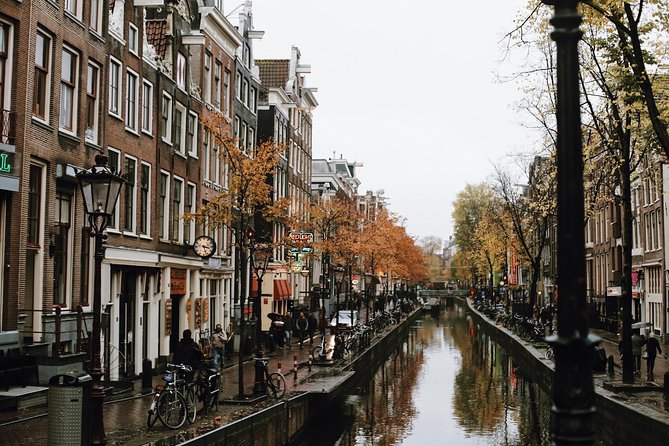
Herengracht brings the focus back to canal architecture, especially the Golden Bend, lined with some of the city’s richest and most ornate Golden Age mansions. This is a good place to compare the showier homes with the narrow buildings seen earlier. The difference reflects wealth and status as clearly as a museum label might.
The tour pauses outside the Anne Frank House, where Anne Frank and her family hid during World War II. Nearby stands the Westerkerk, whose tower is the tallest church tower in Amsterdam. The stop is not an admission visit, and entry to the Anne Frank House is not included. If you want to visit inside, treat that as a separate plan.
Gable stones, hofjes and the Jordaan
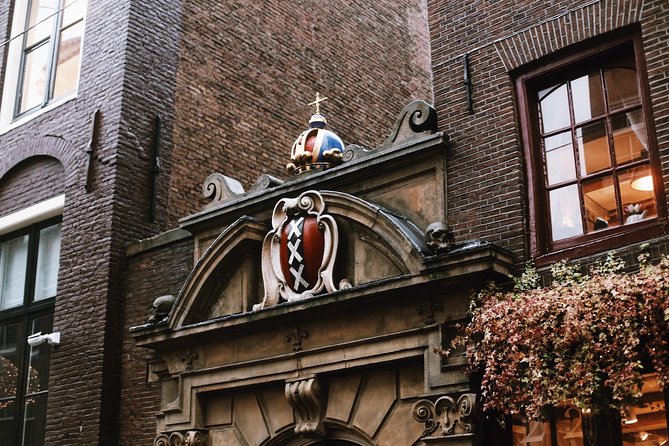
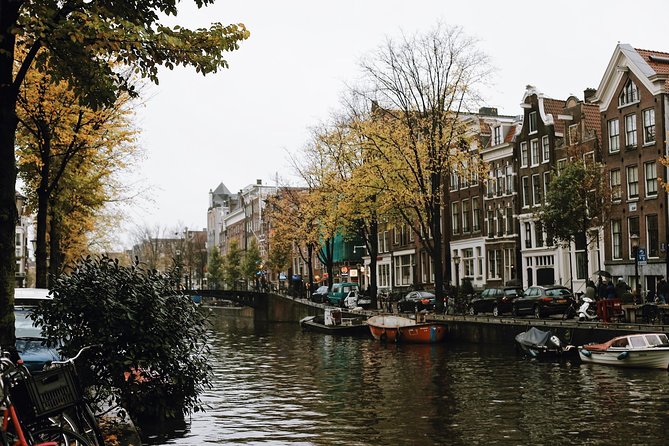
On Bloemgracht, the guide points out carved gable stones on ornate façades. These stones carry allegories and trade emblems, small details that reward looking up. In a city full of canals and handsome houses, they give you something specific to search for after the guide has moved on.
The Karthuizerhof is the largest hofje in Amsterdam. These almshouses were arranged around a quiet courtyard for the city’s poor and elderly. The stop is listed as free, but it is still worth remembering that courtyards are living places, not simply exhibits. Follow your guide’s directions and be considerate if residents are nearby.
Noorderkerk, built for the Jordaan district in the 17th century, has an unusual cross-shaped floor plan associated with Reformation ideals of worship. Again, the exterior and short explanation are the likely focus rather than a guaranteed interior visit.
The route ends at Het Papeneiland, a brown café dating to 1642, at Prinsengracht 2. It is said to serve the city’s best apple pie. The tour’s end point is a practical advantage: you can finish at a canal corner and decide whether to stop for a drink or a slice, rather than ending at the same busy starting point.
What the price buys, and what it does not
At $62.48 per person, the tour’s value depends on whether you want a guide to connect many places in one outing. You are paying for a 2.5-hour guided walk, not museum admission, transport or hotel pickup. For a private booking, the guide is exclusively for your group, which gives you room to ask questions and set the conversation’s focus. The semi-private SAVE option does not include that exclusive arrangement.
The strongest value is orientation. A good guide can turn a series of façades into a connected account of religious change, maritime trade, taxation, civic life and daily architecture. The feedback associated with the tour repeatedly highlights guides who answer questions, keep the group engaged and adjust to people’s interests. Anita, Diana and Pedro are among the names associated with it; assignments may vary.
The trade-off is breadth over depth. Twenty stops in two and a half hours leave little time at any one place. For a first visit, that can be a fair bargain: you see a wide range of the old center and the Jordaan, then choose where to return. If you already know Amsterdam or prefer a slow, specialist visit, a shorter themed walk or a single museum visit may suit you better.
Weather, walking and booking notes

The walk runs rain or shine, and the route may change during national celebrations. In that case, an alternative route is used to retain the main highlights, with no refund or discount offered for the change. Wear comfortable shoes, bring water, and carry an umbrella if rain is possible. A hat is sensible in summer.
You should be comfortable walking for about two and a half hours; the stated fitness level is moderate. Large bags and suitcases are not allowed. The tour is offered in English, uses a mobile ticket, and is near public transportation. Hotel pickup and drop-off are not included, so arrange your own way to Prins Hendrikkade 73.
Bookings are made, on average, 63 days in advance, a useful signal to plan ahead if your dates are fixed. Group discounts are offered. Free cancellation is available up to 24 hours before the start; changes inside that 24-hour window are not accepted, and late cancellations are not refunded. A mobile phone number with country code is required.
Should you book this Amsterdam walk?
Book it if you want a lively first-day introduction that ties together the old center, canal district and Jordaan, and you value a guide’s explanations more than time inside museums. The route’s small contrasts, from the Trippenhuis and its tiny neighbor to grand Herengracht mansions and almshouse courtyards, make Amsterdam’s social history easier to read at street level.
Skip it if you want a leisurely pace, guaranteed access to interiors, or an in-depth visit to the Anne Frank House or Rembrandt House. For most first-time visitors with a half-day to spare, it is a useful way to get oriented and leave with clear ideas for what to explore next.
FAQ
How long is the walking tour?
It lasts approximately 2 hours and 30 minutes.
Where does the tour start?
The meeting point is Prins Hendrikkade 73, 1012 AD Amsterdam.
Where does the tour end?
It ends at Het Papeneiland, Prinsengracht 2, 1015 DV Amsterdam.
Is the tour private?
The standard option is a private activity for your group. The SAVE! BOOK SEMI-PRIVATE option does not include a guide exclusively for your group.
What language is the tour offered in?
The tour is offered in English.
Are attraction admissions included?
The tour includes a guide, but admission is not included at several listed stops. Some sites may not be visited from inside because of increased security measures.
Does the tour run in bad weather?
Yes. It operates in all weather conditions, so dress appropriately.
Is hotel pickup included?
No. Hotel pickup and drop-off are not included.
Are large bags allowed?
No. Large bags and suitcases are not allowed during the tour.
What is the cancellation policy?
You can cancel at least 24 hours before the start for a full refund. Cancellations or changes made less than 24 hours before the start are not accepted for a refund or change.
Added lately in Amsterdam
- Private Amsterdam Red Light District tour with food tastings★ 5.0 · 6 reviews
- Anne Frank and Jewish Culture Private Walking Tour in Amsterdam★ 4.5 · 38 reviews
- Amsterdam: Van Gogh Museum Entrance and Guided Tour★ 3.5 · 3 reviews
- Private Amsterdam WW2 walking tour★ 4.5 · 15 reviews
- Amsterdam: Guided Red Light District and City Walking Tour★ 4.5 · 15 reviews
- 2-Hour Private Anne Frank Walking Tour with Drink★ 5.0 · 3 reviews
- Amsterdam Photography Masterclass – Private Photography Lesson★ 5.0 · 32 reviews
- Private Amsterdam Red Light District tour including sex museum★ 4.5 · 75 reviews
Amsterdam Walking Tours, compared.

Anne Frank’s Story – Guided Walking Tour through Amsterdam
Read our review →
Life of Anne Frank and World War II Walking Tour
Read our review →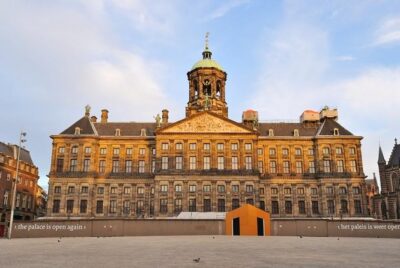
Absolutely Amsterdam – the Essential Introductory Walking Tour
Read our review →

Anne Frank Walking Tour – Guided in EN/DE/IT/ES
Read our review →

Anne Frank Walking Tour Amsterdam Including Jewish Cultural Quarter
Read our review →Browse the lists this tour appears in