
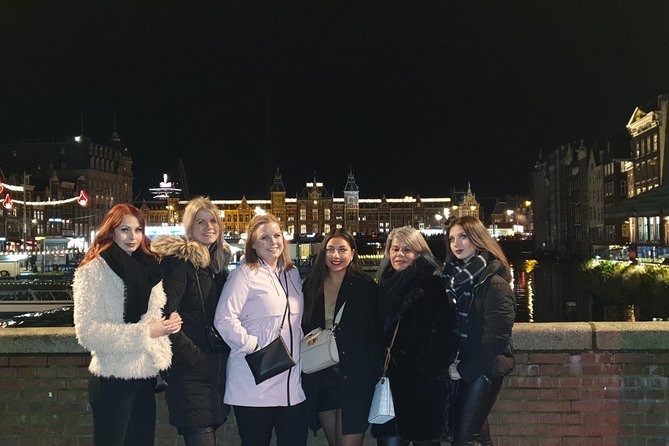
Reviewed · AMSTERDAM RED LIGHT DISTRICT TOURS
Amsterdam Red Light District and City Center Walking Tour
Amsterdam’s Red Light District is more than a row of famous windows. On this two-hour walk, you hear how sex work and coffeeshops fit into the city, then follow old lanes past landmarks that show how Amsterdam grew on soft ground and made space for trade. I like the mix of candid social history and everyday city sights, especially the Waag and the old wooden pub Int Aepjen.
I also like that the group is capped at 16, small enough for questions and a guide who can keep an eye on the whole group. The main consideration is the setting: the tour covers narrow streets in the Red Light District, and it is not recommended if you have limited mobility.
- De Wallen is the focus: Hear about sex work, coffeeshop culture, and the rules surrounding the district.
- The walk links old and familiar sights: See the Dam, the Waag, Int Aepjen, and Amsterdam’s smallest house.
- The city’s foundations get a look-in: Learn why some buildings rest on wooden piles driven into layers of clay and peat.
- Group size stays limited: A maximum of 16 people gives you a better chance to hear and ask questions.
- You can choose a start time: Multiple departures make it easier to fit the walk into your plans.
- It costs $31.24 per person: For two hours with a guide, the value comes from context and orientation, not paid admissions.
Getting oriented at Geldersekade
The tour starts at Geldersekade 2, in Amsterdam’s Old Town, and ends back at the meeting point. That return makes the walk simple to fit into a day: you do not need to plan a ride back from a distant neighborhood. The location is near public transportation, which helps if you are coming from another part of the city.
At around two hours, this is a practical introduction rather than an exhaustive history of Amsterdam. The route gives you a sense of how the old center fits together, while a guide handles the navigation and explains what you are seeing. That is useful on your first day, when narrow streets and similar-looking canals can make the city feel like a maze.
There are multiple start times, so you can choose one that suits your schedule. The route description frames the Red Light District portion as a night visit, but no exact departure hours are specified. Check the time you book, especially if you want the district’s evening atmosphere.
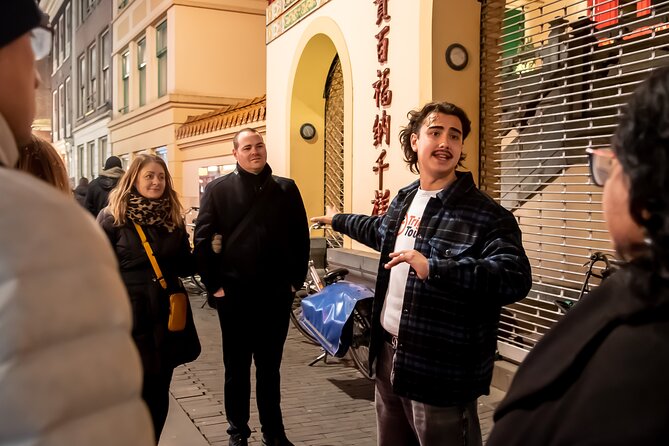
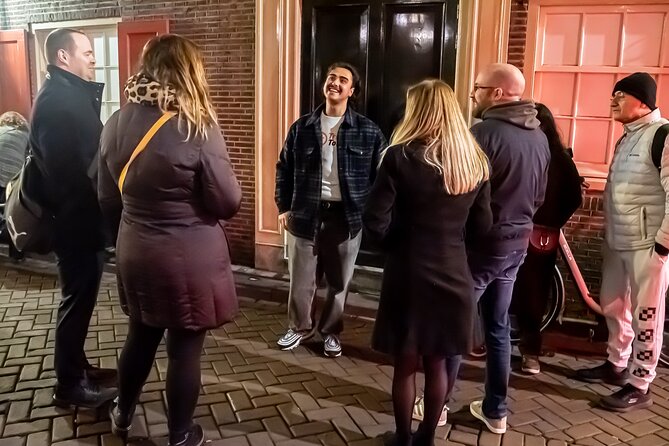
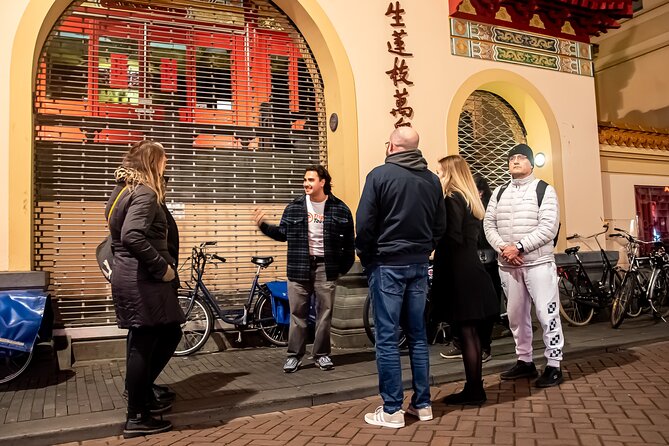
The tour is offered in English, with a maximum group size of 16. That cap matters here: a guide’s explanation can be hard to follow on narrow streets if the group spreads out. Past guides have included Robin, Gio, and Aaron, each praised for friendly delivery, detailed explanations, or keeping the group together. Your guide may be someone else, but those are useful signs of the style to expect.
Understanding De Wallen beyond the windows
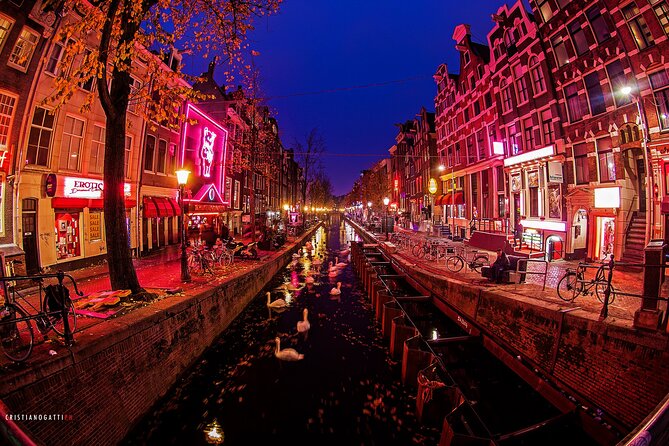
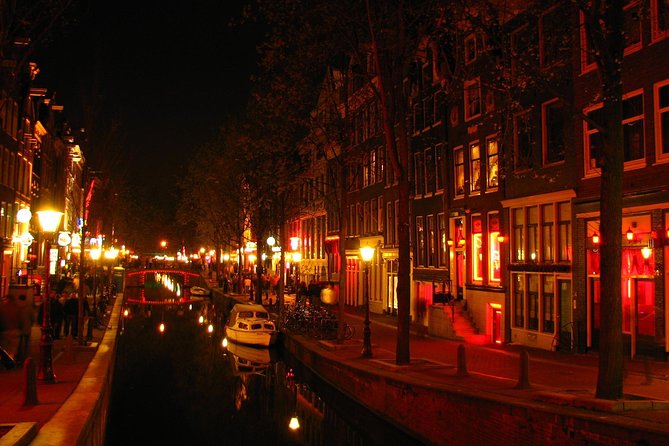
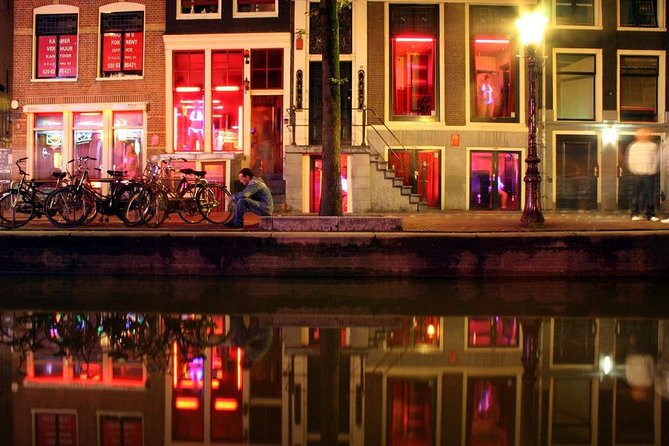
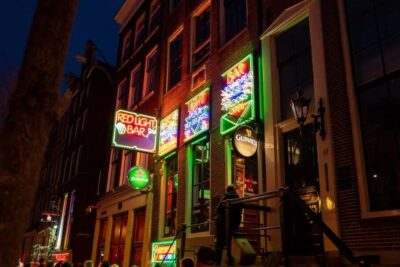
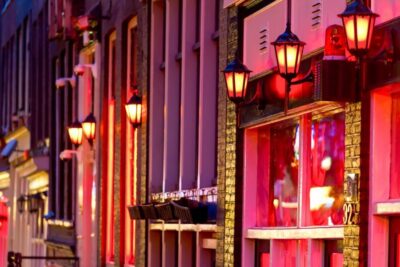
The Red Light District, known as De Wallen, is the central subject of the walk. You explore its narrow lanes and hear about Amsterdam’s coffeeshop culture and sex work industry. The value is not simply seeing a well-known part of town. It is having a guide explain the local context, including how the district’s rules and rights developed.
That background can change the way you read the streets. Without it, the area may register as a collection of windows and crowds. With a guide, you can ask how the district works and hear the story behind the public image. One past participant especially valued learning how laws apply to the windows and coffeeshops, a topic that is not obvious from a casual stroll.
This is a walking tour, not a promise of entry to venues. The listed stops are city streets and landmarks, and admission is free. Go expecting explanation and street-level observation rather than a visit inside every place you pass.
The district is also part of the Old Town, Amsterdam’s oldest area. That connection gives the walk more range than its headline subject suggests. You are not only hearing about contemporary nightlife and sex work; you are also moving through streets shaped by centuries of commerce, defense, and daily life.
More Red Light District tours in Amsterdam:
- Amsterdam: Red Light Secrets Museum Entry Ticket
★ 4.2 · 5,722 reviews - Amsterdam: Red Light District Tour in German/English/Italian
★ 4.9 · 5,623 reviews - Amsterdam Red Light District & Coffee Shop Tour
★ 4.6 · 4,134 reviews
The Dam and a city built on wooden piles
One stop explains why Amsterdam is sometimes called a city built on trees. The ground here contains thick layers of fen and clay, so buildings could not simply sit on firm, dry earth. Many older structures were supported by wooden piles driven down through clay and peat until they reached a layer of sand about 11 meters below.
It is a useful detail because it connects the city’s appearance to its geology. Amsterdam’s old buildings are not just picturesque facades; their foundations tell a story about the practical work required to build on wet ground. You will hear how piles were used to support houses, and why the sandy layer mattered.
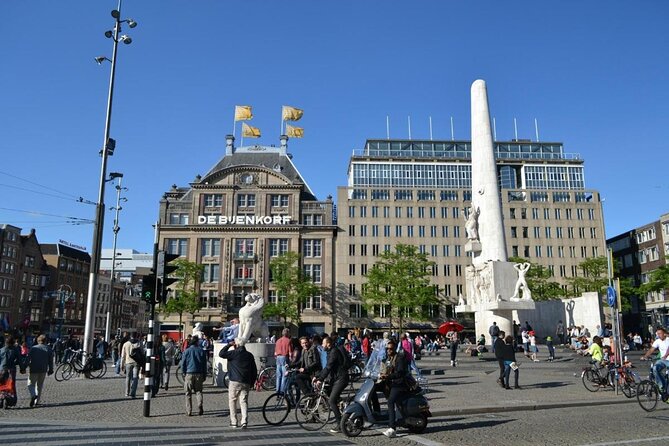
The Dam adds a more public landmark to the route. In a tour that spends time in compact lanes, a major open city space helps you understand the wider center. The guide can tie the built environment to the city’s growth, giving you a broader frame before you return to the older streets.
Int Aepjen and the old wooden city
The pub Int Aepjen, also called The Ape, dates to around 1540. It is one of only two wooden buildings left in Amsterdam, a distinction made more striking by the city’s 1452 fire. After that fire, the government required brick facades, so a surviving wooden building offers a rare glimpse of an earlier style.
You do not need to be an architecture expert to appreciate the contrast. The pub makes a good stop because it turns a broad point about Amsterdam’s building rules into something you can see in front of you. It is also a reminder that city regulations often grow out of hard lessons, not abstract planning.
The stop is best understood from the outside unless your guide says otherwise. No interior visit is specified, so treat it as a chance to hear the story and inspect the building’s place in the street rather than as a pub tasting or meal.
The Waag: gate, guildhall, and city landmark
The Waag was once one of Amsterdam’s city gates and part of its defensive wall. Built around the 1400s, it is described as the city’s second-oldest building. Later, guilds, or organizations of craftspeople, used the building and the square around it.
That layered use is what makes the Waag a particularly good stop. You can follow the city’s changing needs in one place: defense first, then work and trade. The building gives the guide a natural way to explain how Amsterdam’s center developed beyond the Red Light District itself.
The square also offers a change of pace from the narrow streets. On a guided walk, landmarks such as this help anchor the route and make the neighborhood easier to remember later. If you are still finding your bearings, the history and physical setting work together: you learn not only what the building was, but why it mattered to the old city.
More walking tours in Amsterdam:
- Anne Frank’s Story – Guided Walking Tour through Amsterdam
★ 5.0 · 11,619 reviews - Amsterdam: Life of Anne Frank and World War II Walking Tour
★ 4.8 · 10,467 reviews - Absolutely Amsterdam – the Essential Introductory Walking Tour
★ 5.0 · 3,629 reviews - Amsterdam: Anne Frank Guided Small Group Walking Tour
★ 4.8 · 2,722 reviews
The smallest house and a trading company’s footprint
The smallest house in Amsterdam dates to around the 1700s. It was first used as storage for the Dutch East India Company, known as the VOC, and later became a home where people lived for a long time.
The small scale gives you an immediate contrast with the trading company’s reach. A structure once used to store goods for an overseas enterprise later served as someone’s residence. That change makes the stop more than a novelty photo opportunity, though its size is naturally part of the appeal.
As with the other landmarks, the useful part is the story attached to it. A small building can be easy to overlook when you are walking quickly through the old center. A guide gives you a reason to pause and a bit of context to carry with you.
A condom shop and the tour’s frank tone
The route also passes the world’s first specialty condom shop, which has been in place since 1987. It sells condoms in different styles, including custom-sized options. This is a distinctively direct stop, and it fits the tour’s willingness to address sex work and sexual health without treating the subject as a sideshow.
The shop is not a substitute for the tour’s broader discussion of the district. Instead, it is a visible example of how sex and sexuality have a place in Amsterdam’s commercial life. If that topic makes you uncomfortable, bear in mind that it is part of the route’s subject. The walk is built around explaining the area, not avoiding its more candid details.
What the $31.24 price buys you
At $31.24 per person, the price is reasonable if you want a guide to connect the landmarks and explain the district’s social context. Admission to the listed sights is free, so you are not paying for access to buildings. You are paying for two hours of interpretation, a set route, and help getting oriented in a part of Amsterdam that can be difficult to read on your own.
The value rises if this is your first visit or if you want to understand the laws and customs behind the Red Light District rather than simply walk through it. A self-guided stroll can show you the streets, but it will not automatically explain the history of the Waag, the wooden foundations, or the district’s sex work and coffeeshop culture.
A private tour may cost more, but some past participants considered the extra expense worthwhile. That choice depends on how much you value a more personal pace and the chance to focus on your own questions. The standard group is limited to 16, so you are not joining a huge crowd, though it is still a shared walk rather than a private conversation.
The experience has a 4.7 average rating from seven ratings, a small sample but a strong early signal. Praise has focused on detailed explanations, friendly guides, attention to the group, and the stories behind local legends. One lower rating raised a concern about a guide appearing impaired. That is an isolated warning, not a reason to assume it will happen, but it is worth noting alongside the otherwise positive feedback.
Who will enjoy this walk, and who may want another plan
I would consider this tour if you are new to Amsterdam, curious about the Red Light District, or interested in hearing how local rules and rights have shaped the area. It is also a good fit if you like mixing social history with recognizable buildings instead of spending two hours on one topic alone.
The tone is candid, so it suits adults who are comfortable discussing sex work and coffeeshop culture in public. You do not need to arrive with background knowledge. The guide’s role is to explain the basics and give you a clearer picture of what you are seeing.
If your main interest is entering historic buildings, this is not the right format. The stops are presented as a walking route, and admission is listed as free. Nor is it recommended for people with limited mobility; the tour covers narrow streets on foot for about two hours.
You receive confirmation when you book. Free cancellation is available until 24 hours before the start time; cancellations made later are not refunded, and changes within that period are not accepted. Service animals are allowed, and most people can participate.
Should you book the Amsterdam Red Light District walk?
Book it if you want a compact, guided introduction to De Wallen that also touches on the old city’s buildings and foundations. The combination of frank social context, a manageable two-hour length, and a 16-person group limit makes it a useful first-day orientation, especially at a price of $31.24.
Skip it if you want a museum visit, an interior tour, or a long, highly specialized history walk. For most curious first-time visitors who are comfortable with the subject, it offers a sensible way to see the district with more context than a solo wander provides.
FAQ
How long is the Amsterdam Red Light District and City Center Walking Tour?
The tour lasts approximately two hours.
How much does the tour cost?
The listed price is $31.24 per person.
What language is the tour offered in?
The tour is offered in English.
Where does the tour start?
It starts at Geldersekade 2, 1012 BH Amsterdam.
Where does the tour end?
It ends back at the meeting point.
What places are included on the walk?
The route includes De Wallen, the Dam, Int Aepjen, the Waag, Amsterdam’s smallest house, and a specialty condom shop.
What topics does the guide cover?
The walk covers the Red Light District, coffeeshop culture, sex work, local laws and rights, and the history of Amsterdam’s buildings and old town.
How many people can join the group?
The maximum group size is 16.
Can I cancel for a refund?
Yes. You can cancel for a full refund up to 24 hours before the tour’s start time.
Added lately in Amsterdam
- Nemo Science Museum Admission★ 5.0 · 4 reviews
- Off the Beaten Paths Dutch Landscape Private Tour 1/2 day Jaguar★ 5.0 · 10 reviews
- Northern Highlights Tour: visit 4 magnificent places from Amsterdam★ 5.0 · 5 reviews
- Off the beaten paths Dutch Country Side Private Tour in Jaguar★ 5.0 · 5 reviews
- From Amsterdam: Day Trip to Rotterdam, Delft & Hague with Cruise★ 3.0 · 15 reviews
- Amsterdam : Keukenhof FlowerFarm Privatetour Skip-The-Line ticket★ 5.0 · 33 reviews
- NEMO Science Museum Amsterdam Admission Ticket★ 4.5 · 36 reviews
- Amsterdam Light Festival: Canal Cruise + Bite & Unlimited Drinks★ 4.5 · 20 reviews
Amsterdam Red Light District Tours, compared.
Red Light District Tour in German/English/Italian
Read our review →
Amsterdam Red Light District & Coffee Shop Tour
Read our review →
Red Light District Pub Crawl with Unlimited Shots
Read our review →
Browse the lists this tour appears in