
Reviewed · AMSTERDAM MUSEUM TOURS
Amsterdam: The Kattenkabinet Cat Museum Entry Ticket
The Kattenkabinet makes a simple promise: art about cats, in a house where real cats may stroll past the frames. Inside, you’ll find paintings, posters, sculpture, and smaller curiosities, along with the story of founder Bob Meijer and the cat who inspired his collection.
I like the contrast between serious art and playful subject matter, and the chance to explore it in a historic Herengracht house rather than a conventional gallery. I also like the personal touches, especially the spot where you can leave a photo or note about your own cat.
The main drawback is scale. The museum is small, and you may finish in 20 minutes if you move quickly. Think of it as a distinctive short stop, not a half-day attraction, and remember that the resident cats may not appear on cue.
- Art in many forms: Look for paintings, prints, lithographs, posters, photographs, sculptures, and other cat-related objects.
- Famous names among the cats: The collection includes works by Rembrandt, Picasso, Toulouse-Lautrec, Corneille, and Jože Ciuha.
- A personal origin story: Learn how collector Bob Meijer built the museum in memory of the cat who inspired it.
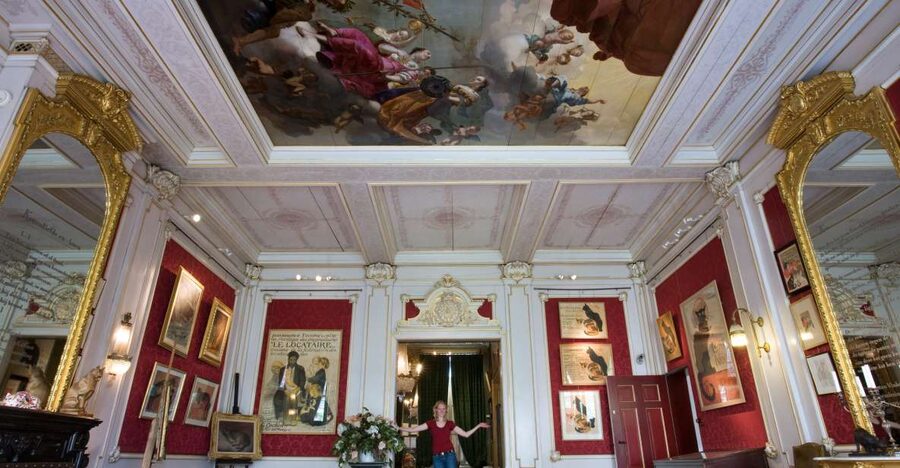
- A historic canal-house setting: The Herengracht building has a 17th-century ceiling painting that came to light during renovation in the 1980s.
- Resident cats, sometimes: Cats wander through the museum, but their presence and willingness to be petted cannot be guaranteed.
- A short, flexible visit: Entry costs about $15 per person, and you can explore at your own pace.
A cat museum with a real art collection
Amsterdam has no shortage of famous museums, but the Kattenkabinet offers a different kind of visit. It brings together art and objects devoted to cats, from polished works by recognized artists to lighter pieces by less familiar makers. The theme is narrow; the range of styles and materials is not.
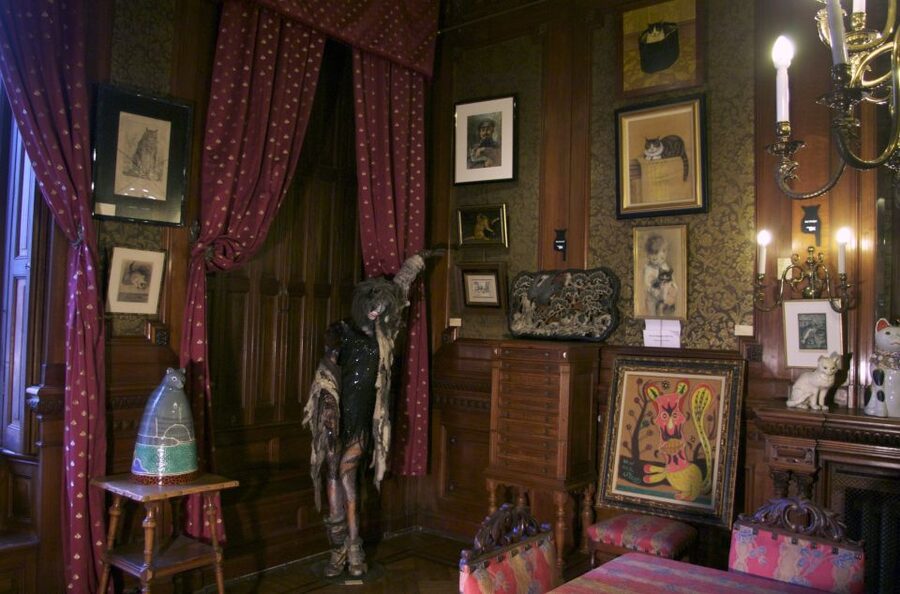
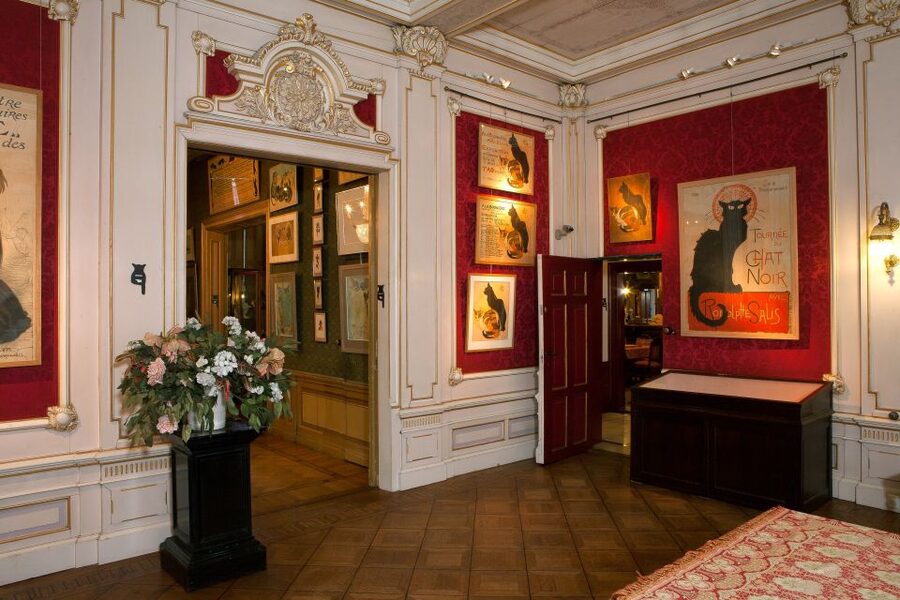
That distinction matters. You are not simply walking through a room of novelty cat pictures. The collection includes paintings, drawings, lithographs, photographs, posters, sculptures, and other objects, with works associated with artists such as Rembrandt, Picasso, Toulouse-Lautrec, Corneille, and Jože Ciuha.
The mix gives the visit its charm. A well-known name may catch your eye, then a playful or unusual object pulls you in another direction. You can enjoy the art as a cat lover, but you do not need to study art history to get something out of the rooms.
I would go with an open mind about what counts as museum art. Some pieces invite close attention; others are there to make you smile. That range keeps the collection from feeling too solemn, while the house itself gives the displays a more intimate feel than a large, formal gallery.
Start with Bob Meijer’s story

The museum’s collection grew from the affection of its founder, Bob Meijer, for a cat who inspired him. At the start of your visit, take a moment to read about that origin. It gives the objects a human thread and helps explain why the museum is more than a themed assortment.
The story also points to a feeling many cat owners recognize: a pet can become part of the family’s history, and remembering that animal can take many forms. The museum makes room for that idea with a small shrine where you can leave a photo of your own cat. Some visitors also leave notes or drawings, creating a modest, shared tribute rather than a polished display.
If you want to bring a picture, keep it small and easy to leave. The shrine is a sweet detail, but it is not the main exhibition, so give yourself time to look at the art as well. The personal story is a useful starting point, then the rooms broaden the subject into centuries of cats in art and popular culture.
More museum visits in Amsterdam:
- Amsterdam: Van Gogh Museum Ticket
★ 4.7 · 52,054 reviews - Moco Museum Amsterdam Entrance Tickets with Banksy & More
★ 4.4 · 10,088 reviews - Amsterdam: The Upside Down Museum Entrance Ticket
★ 4.4 · 9,506 reviews
Take your time through the rooms
The Kattenkabinet is a compact museum, with displays spread through a small number of rooms and across more than one floor. The exact pace is yours. A quick pass might take around 20 minutes, while an hour gives you time to read, look closely, browse the shop, and pause if a cat happens to be nearby.
The collection’s variety rewards a slower walk. Notice how the image of the cat changes from one medium to another: a print has a different feel from a sculpture, and a poster can be as telling as a formal painting. You may recognize celebrated artists, but much of the pleasure comes from seeing how many ways people have chosen to depict the same familiar animal.
This is also a good place to let children set the pace. There are clear, appealing subjects in every room, and the mix of artwork and real cats can keep a family engaged. A visit has held the attention of children aged nine and thirteen for as long as two hours, though that is a generous visit for a small museum, not a promise of a long itinerary.
You do not need to rush through just because the museum is small. Look at the labels, notice the differences between rooms, and take a second pass if something catches your eye. The small scale is a limitation if you expect a sprawling exhibition, but it can be a strength if you want a relaxed cultural break between larger Amsterdam sights.
Look up at the canal-house details
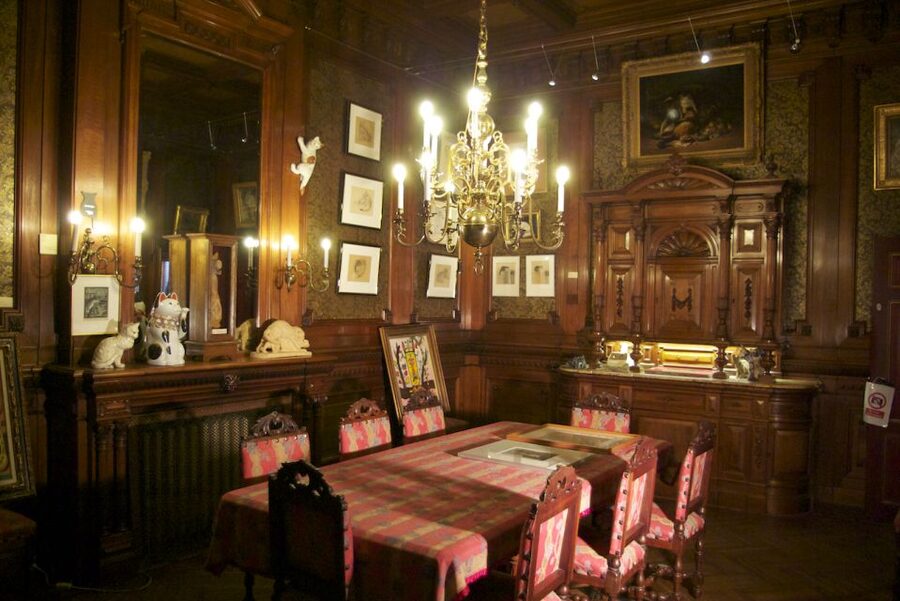
The building is part of the experience. The museum sits on the Herengracht, in an Amsterdam canal house whose domestic scale suits the personal collection. Instead of moving through a vast gallery, you encounter the art in rooms that feel connected to the house around them.
One detail worth watching for is the 17th-century ceiling painting in one of the rooms. It was uncovered during renovation work in the 1980s and comes from the school of De Lairesse. The scene shows the Amsterdam City Virgin, a reminder that the building has a history beyond its present cat-themed role.
That painted ceiling adds a useful counterpoint to the collection. You arrive for cats, then find yourself looking up at a work tied to the city’s older visual culture. It is a small discovery, but one that gives the house more depth than a simple backdrop.
The museum is not large, and it does not aim to recreate a grand public gallery. That is part of its appeal. The rooms let the collection feel personal, while historic details give you another reason to look beyond the obvious subject.
Resident cats are the delightful wild card
Real cats are among the museum’s most memorable features, but treat them as a happy possibility, not a scheduled attraction. Resident cats may wander through the rooms or settle somewhere nearby. Some are comfortable around people and may accept a gentle stroke; others may be resting or out of sight.
That uncertainty is worth keeping in mind, especially if you are planning the visit mainly to meet a cat. You might see several, one, or none during your time there. The art and building remain the core of the visit, and the cats are an extra that can make it feel wonderfully alive.
If a cat is present, give it space and let it choose whether to approach. The museum is still a place to look at art, not a cat café, and food and drinks are not allowed inside. Smoking is also prohibited in the garden.
For children, this is a helpful moment to set expectations. The cats are residents, not performers, and a quiet visit is more likely to suit them than a crowd trying to attract attention. If the cat stays curled up, you still have plenty to notice in the artwork.
More attraction tickets in Amsterdam:
- Amsterdam: Heineken Experience Ticket
★ 4.6 · 30,055 reviews - Amsterdam: Rijksmuseum Entry Ticket
★ 4.7 · 25,535 reviews - Amsterdam: Icebar Entry Ticket with 3 Drinks
★ 4.2 · 14,562 reviews - Amsterdam: Keukenhof Ticket and Roundtrip Shuttle Transfer
★ 4.7 · 11,799 reviews
Make time for the garden and shop
The museum has a garden, which gives you a change of pace after the rooms. It can be a pleasant place to pause when open, though the outdoor area may be closed at some times of year. Do not build your whole visit around sitting there, and check the current opening details if the garden matters to your plans.
The garden is not a substitute for a larger outdoor attraction, but it adds breathing room to a compact museum. One practical point: smoking is not allowed there, and food and drinks are not permitted in the museum. Plan a café stop before or after rather than bringing refreshments in.
The gift shop is another useful final stop. It sells cat-themed souvenirs, including posters and tote bags, and gives you a chance to take home something more practical than a photograph. If you collect prints or small gifts, leave a few minutes for browsing before you head out.
Is $15 good value for a short visit?
At about $15 per person, the ticket is easiest to justify if you care about cats, art, or unusual historic interiors. You are paying for a specialized collection in a distinctive house, not for hours of exhibits. If you move quickly, the price may feel high for a 20-minute visit; if you read the labels, look closely, and enjoy the setting, the value improves.
The strongest case for the ticket is the combination. You get a focused art collection, the story behind it, a historic canal house, and the possibility of seeing resident cats. Any one element alone might make for a brief stop. Together, they create a visit with a clear identity that is hard to confuse with a standard gallery.
The value is less convincing if you are not interested in cats and expect a large museum. The collection’s subject is specific, the building is small, and the visit does not include a guide or a set itinerary. You explore independently, which suits people who like to browse at their own pace but offers less structure for anyone seeking a guided tour.
The ticket is valid for one day, and starting times depend on availability. You can reserve now and pay later, and cancellation up to 24 hours in advance is eligible for a full refund. Those terms help if your Amsterdam plans are still taking shape, but they do not change the basic value calculation: this is a compact, specialized stop.
Who should put it on the Amsterdam plan?
I would make room for the Kattenkabinet if cats are a genuine interest, not just a passing amusement. The collection is especially satisfying for people who like seeing familiar subjects represented in different artistic styles. Cat owners may also appreciate the shrine and the personal story behind the museum.
Families can make it work well, particularly with children who enjoy animals and visual details. The short route is manageable, and the resident cats can add an element of surprise. Still, be clear with children that the cats may be sleeping, absent, or uninterested in being petted.
Art lovers may enjoy the unexpected setting and range of cat imagery, even if the subject is playful. The famous names are a draw, but the visit is not a substitute for Amsterdam’s larger art museums. Think of it as a small, characterful side trip rather than a major art-history survey.
If you have limited time and no particular interest in cats, choose another attraction. If you love cats and have an hour to spare, this is an easy, distinctive stop. Allow extra time if you want to study the collection, visit the garden when open, or browse the shop, but do not expect a full afternoon’s worth of exhibits.
FAQ
How much does entry to the Kattenkabinet cost?
The ticket price is about $15 per person. The ticket includes museum entry.
How long should I allow for a visit?
The museum is small. You might finish in about 20 minutes if you move quickly, while an hour allows time to look more closely; families may spend longer.
Will I see resident cats?
Resident cats live at the museum and may wander through the rooms, but their appearance is not guaranteed. They may also choose not to interact.
What kinds of art are on display?
The collection includes cat-themed paintings, drawings, lithographs, photographs, posters, sculptures, and other objects. Artists represented include Rembrandt, Picasso, Toulouse-Lautrec, Corneille, and Jože Ciuha.
Is the garden part of the visit?
There is a garden, but it may be closed at some times of year. Smoking is not allowed in the garden.
Can I bring food or drinks into the museum?
No. Food and drinks are not allowed inside the museum.
Added lately in Amsterdam
- Nemo Science Museum Admission★ 5.0 · 4 reviews
- Off the Beaten Paths Dutch Landscape Private Tour 1/2 day Jaguar★ 5.0 · 10 reviews
- Northern Highlights Tour: visit 4 magnificent places from Amsterdam★ 5.0 · 5 reviews
- Off the beaten paths Dutch Country Side Private Tour in Jaguar★ 5.0 · 5 reviews
- From Amsterdam: Day Trip to Rotterdam, Delft & Hague with Cruise★ 3.0 · 15 reviews
- Amsterdam : Keukenhof FlowerFarm Privatetour Skip-The-Line ticket★ 5.0 · 33 reviews
- NEMO Science Museum Amsterdam Admission Ticket★ 4.5 · 36 reviews
- Amsterdam Light Festival: Canal Cruise + Bite & Unlimited Drinks★ 4.5 · 20 reviews
Amsterdam Museum Tours, compared.

Moco Museum Amsterdam Entrance Tickets with Banksy & More
Read our review →


Amsterdam’s Weirdest Museum: Believe It or Not!
Read our review →

Browse the lists this tour appears in