Reviewed · AMSTERDAM TOURS
History & culture tour in Amsterdam with a local
Amsterdam’s story is written right into its streets: a fishing village grew into a world-trading city, while old gates, quiet courtyards, and canal-side houses still shape daily life. I like this tour’s mix of big historical turning points and street-level details, and the chance to see places such as Begijnhof and Zeedijk through a local guide’s eyes.
I also like the small-group cap of 15 and the simple Dutch treat along the way. One thing to weigh: this is a walking tour, not a series of museum visits, so you should expect most of the history outdoors and on the move. Allow 2 to 2.5 hours rather than planning around a strict two-hour finish.
- A city story in seven stops: Follow Amsterdam from Beursplein and Dam Square to Central Station.
- Small group: The maximum is 15, giving you more room to hear the guide and ask questions.
- Local perspectives: Learn how a courtyard, guild hall, and former rough-edged street fit into Amsterdam’s past and present.
- A Dutch snack: A classic stroopwafel is included along the way.
- Useful early in a visit: The route connects major landmarks and gives you context for exploring on your own afterward.
- About $30 per person: A reasonable price for a guided walk lasting roughly two hours, though it does not promise interior visits.
Amsterdam’s story begins at Beursplein
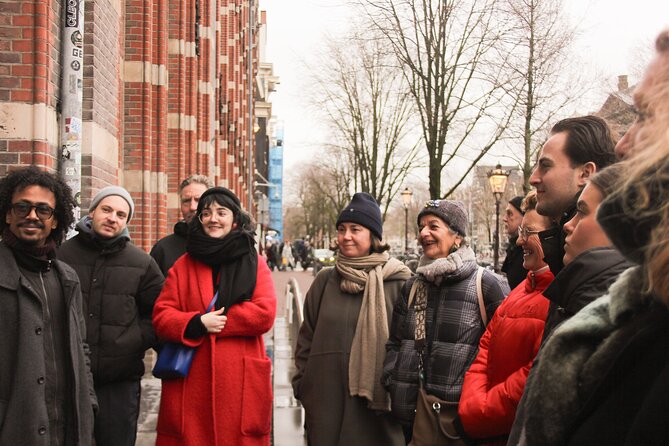
The walk starts at Beursplein, where your guide introduces the city’s origins and explains how Amsterdam got its name. The first stop sets up the tour’s central theme: how a fishing village grew into a major center of the global economy in the 17th century.
That broad arc helps make the later sights more than a string of photogenic façades. As you move through the old center, you can connect the city’s growth to its waterways, trade, civic institutions, and changing neighborhoods. The guide also discusses the city between stops, so the walk is not limited to a short speech at each landmark.
The pace should suit you if you want an introduction rather than a long lecture. Beursplein itself gets about 10 minutes, and the group then continues on foot. You will need to stay with the guide and be ready to walk between sights; the stated duration includes those stretches.
Dam Square puts civic power on display
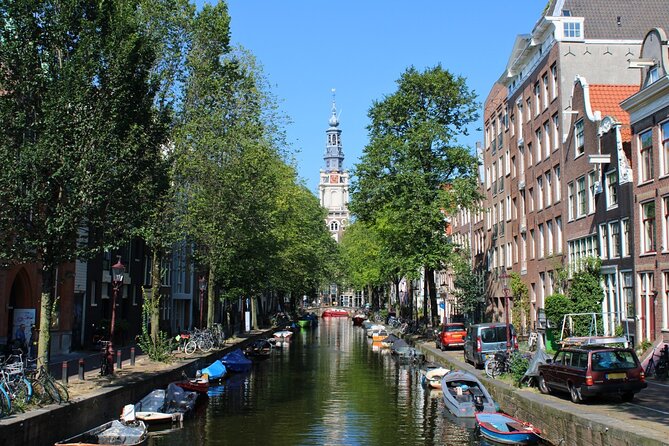
At Dam Square, the guide explains the square’s place in Amsterdam’s formation and points out the Royal Palace. The stop also covers the square’s role during the Second World War, adding a modern historical chapter to the city’s early development.
This is a useful place to pause and consider how a public square can serve different purposes across centuries. The tour focuses on the site’s significance and visible architecture, rather than promising entry to the palace. If you want a detailed interior visit, treat that as a separate plan.
Allow about 10 minutes here. That is enough for an introduction and a look around, but not a deep examination of every building or event associated with the square. The value is the guide’s context: a few clear points can help you read the place more thoughtfully when you pass through again.
A few more Amsterdam options worth a look
- Amsterdam: Van Gogh Museum Ticket
★ 4.7 · 52,054 reviews - Amsterdam Classic Saloon Boat Cruise with Drinks and Cheese
★ 5.0 · 31,825 reviews - Amsterdam Luxury Canal Cruise + Unlimited Drinks & Bites option
★ 5.0 · 30,518 reviews
Begijnhof offers a quieter side of Amsterdam
Begijnhof changes the tone. This serene courtyard gives the guide a chance to discuss Amsterdam’s religious history and what the site reveals about the city’s history of tolerance. You will also see one of Amsterdam’s oldest houses, one of the two wooden cottages noted on the route.
I like this contrast with the busy streets outside. A tucked-away courtyard can make the city’s past feel less like a timeline and more like a series of choices about how people lived together. The guide’s explanation gives you a way to think about tolerance as a feature of Amsterdam’s history, rather than just a modern label.
The stop lasts about 15 minutes, the longest listed pause on the tour. Keep in mind that the walk provides an introduction to the courtyard and its history; it is not described as an extended visit or a formal religious-history presentation. Still, this is one of the stops where a local guide can add meaning you might miss by walking in, taking a photo, and leaving.
Canal houses reveal the city’s everyday ingenuity
At the House On The Three Canals, the guide points out a house positioned on three canals and explains the so-called bicycle bridge. The stop is brief, about 10 minutes, but it shifts attention from grand civic sites to the built details that make Amsterdam distinctive.
This is the kind of detail I find useful on a first walk through a city. You begin to look beyond the main sights and notice how houses, canals, and bridges fit together. The tour does not promise a technical architecture lesson, but its attention to a particular house and a bicycle bridge offers a more local angle than simply ticking off famous landmarks.
As with the other outdoor stops, expect to hear about what you can see from the street. The supplied details do not mention an interior visit, so plan on a guided look from the public route rather than access inside a private building.
Nieuwmarkt connects old gates and guild life
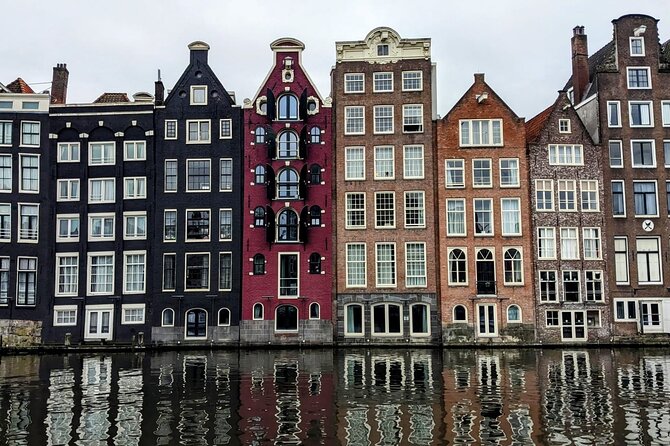
Nieuwmarkt brings the story back to Amsterdam’s institutions. Here, you learn about the Waag, one of the old city gates that later became a guild hall, and about the importance of guilds in the city. The guide also points out the so-called dancing houses.
That shift from a defensive gate to a place associated with guilds gives the stop a practical historical thread: buildings and public spaces change as the city changes. Guilds mattered to Amsterdam’s civic and working life, and the Waag gives the guide a concrete place to explain that role.
The stop is around 10 minutes, so think of it as a compact introduction. You will get context and a chance to look closely, but not a long building tour. The dancing houses add a lighter visual note to what might otherwise sound like a lesson in city administration.
Or step off the canal ring for a bit:
- Amsterdam: Heineken Experience Ticket
★ 4.6 · 30,055 reviews - Amsterdam: Rijksmuseum Entry Ticket
★ 4.7 · 25,535 reviews - Amsterdam: Classic Boat Cruise with Optional Cheese & Wine
★ 4.6 · 22,925 reviews - Amsterdam: Evening Cruise with Optional Wine and Snacks
★ 4.4 · 19,696 reviews
Zeedijk tells a neighborhood’s changing story
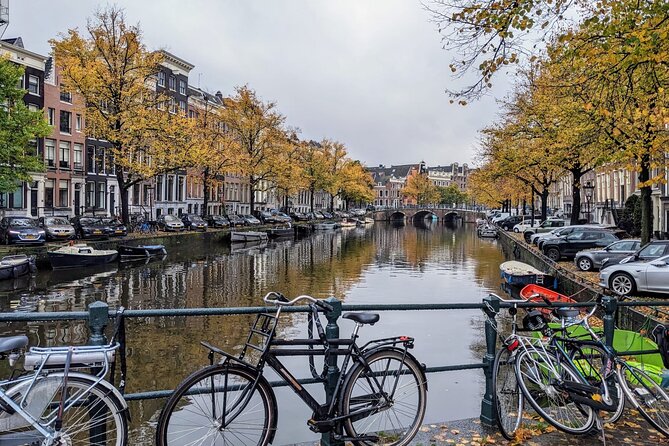
On Zeedijk, the guide introduces Chinatown and the street’s difficult reputation during the 1970s, then explains its decline and transformation into a favorite place for many Amsterdammers. That past-to-present contrast is among the most useful parts of the walk because it treats a neighborhood as something living, not frozen in an old story.
The stop can help you notice how perceptions of a street change over time. Rather than presenting Zeedijk only as a historic district, the tour links its earlier troubles with the way people use and value it today. This is a good moment to ask the guide how the neighborhood’s history fits into the wider story of Amsterdam.
You spend about 10 minutes here. The tour is an overview, not a full Chinatown food or culture walk, so book it for the historical frame and local perspective rather than expecting a series of shop or restaurant visits.
Central Station closes the route with a story of connection
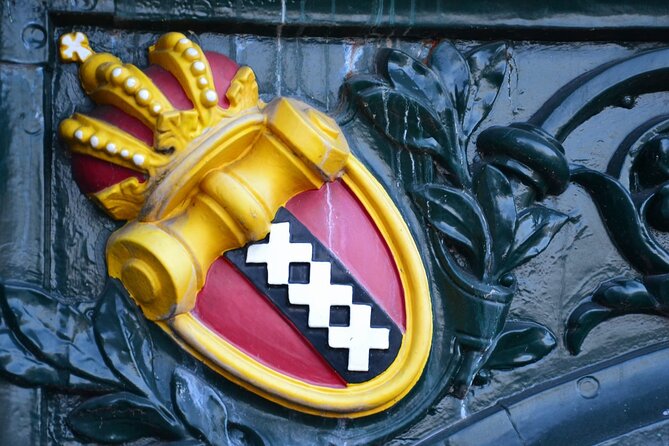
Central Station is presented as one of Amsterdam’s most striking buildings, with attention to its architecture and the importance of its location as a transport hub. The guide connects the station to centuries of movement, connection, and prosperity.
That makes a fitting final subject for a city whose story includes trade and changing links to the wider world. The station is more than a place to catch a train in this context; it becomes a marker of how Amsterdam connects outward. The listed stop lasts about 10 minutes.
The tour information says the activity ends back at the Beursplein meeting point, even though Central Station appears as a stop. If your next plan depends on the exact endpoint, check the meeting instructions before setting off rather than assuming you will finish at the station.
A small group, a local guide, and a stroopwafel
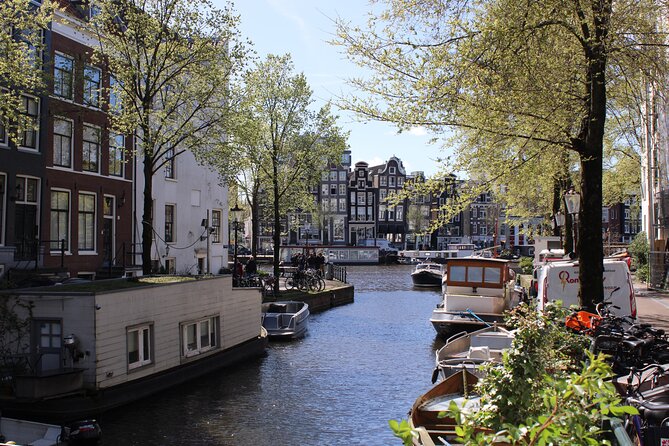
The group is capped at 15 people. That is small enough to make it easier to hear explanations and take part in a conversation than on a large coach tour, while still giving you the social feel of exploring with other people. If you prefer a more personal pace, a private version has also been taken, and guide Manouk has tailored a walk to suit the people on it.
Manouk is the named guide associated with the experience, though the information does not guarantee that she will lead every departure. The strongest points attached to the guiding are the combination of historical explanation, insight into Amsterdam today, and an ability to adapt the walk to the group. Those qualities matter most if you want more than memorized dates.
A classic Dutch stroopwafel is included along the way. It is a modest touch, not a meal, but it gives the walk a small taste of local food culture. The tour does not specify where the snack is served or how much time is set aside for it, so think of it as a treat during the outing rather than a planned food stop.
What the $30 price gets you
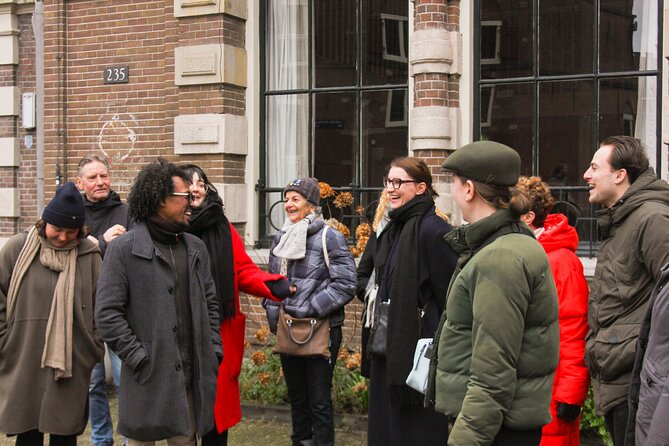
At $30.07 per person, this is a fairly accessible way to get a guided introduction to central Amsterdam. You are paying for roughly two hours of a local guide’s time, a route linking seven distinct stops, and commentary between them. The group limit and the mix of subjects add value if you like to understand what you are seeing instead of relying on a map or guidebook alone.
The stops are marked as having free admission, so the tour is built around walking and outdoor interpretation rather than paid entry to attractions. That keeps the price down, but it also sets expectations: you should not book this as a palace, museum, or house-interior tour. Its value lies in connecting the sights and explaining what they tell you about the city.
The published duration is approximate, and the walk may take 2 to 2.5 hours. That extra half hour matters if you have a timed booking afterward. I would leave breathing room in your schedule, especially if you want to pause for photos or ask the guide questions.
The tour is offered in English, uses a mobile ticket, and starts at Beursplein. Service animals are allowed, and the activity is described as suitable for most people. It is also near public transportation. The cancellation terms are flexible if your plans change: cancel at least 24 hours before the start for a full refund.
Who should book this Amsterdam history walk
I would choose this tour early in a first visit, especially if you want a clear framework for Amsterdam’s origins, civic life, religious past, architecture, and changing neighborhoods. It suits history-minded visitors who enjoy learning while walking and appreciate a guide who can connect old buildings with the city as it is now.
It is also a good fit if you like a manageable group rather than a private guide, and if a small food touch adds to the fun. The private option may suit you better if you want the route tailored to your interests, though the details provided do not specify its cost or availability.
You may want another kind of experience if your priority is going inside landmarks, spending a long time at each stop, or focusing on food rather than history. This walk gives you a broad, street-level introduction, not an exhaustive tour of every site. For the price, its strength is the guide’s ability to make familiar central Amsterdam places speak to one another.
FAQ
How long does the tour take?
It lasts about two hours, but the walking tour can take 2 to 2.5 hours.
What is the price per person?
The listed price is $30.07 per person.
What language is the tour offered in?
The tour is offered in English.
Where does the tour start?
It starts at Beursplein, 1012 JW Amsterdam, Netherlands.
Where does the tour end?
The activity is listed as ending back at the meeting point, Beursplein.
How many people can join?
The group has a maximum of 15 travelers.
Is a stroopwafel included?
Yes. A classic Dutch stroopwafel is included along the way.
Which places are included on the route?
Stops include Beursplein, Dam Square, Begijnhof, the House On The Three Canals, Nieuwmarkt, Zeedijk, and Central Station.
Can I cancel for a refund?
Yes. You can receive a full refund if you cancel at least 24 hours before the experience starts.
Are service animals allowed?
Yes. Service animals are allowed on the tour.
Added lately in Amsterdam
- Private Amsterdam Red Light District tour with food tastings★ 5.0 · 6 reviews
- Anne Frank and Jewish Culture Private Walking Tour in Amsterdam★ 4.5 · 38 reviews
- Amsterdam: Van Gogh Museum Entrance and Guided Tour★ 3.5 · 3 reviews
- Private Amsterdam WW2 walking tour★ 4.5 · 15 reviews
- Amsterdam: Guided Red Light District and City Walking Tour★ 4.5 · 15 reviews
- 2-Hour Private Anne Frank Walking Tour with Drink★ 5.0 · 3 reviews
- Amsterdam Photography Masterclass – Private Photography Lesson★ 5.0 · 32 reviews
- Private Amsterdam Red Light District tour including sex museum★ 4.5 · 75 reviews
Amsterdam Tours, compared.
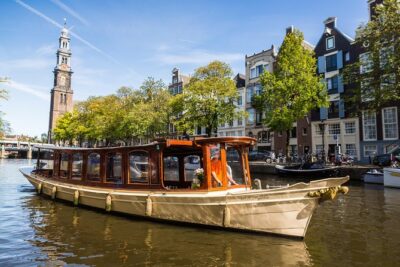
Amsterdam Classic Saloon Boat Cruise with Drinks and Cheese
Read our review →
Amsterdam Luxury Canal Cruise + Unlimited Drinks & Bites option
Read our review →


Classic Boat Cruise with Optional Cheese & Wine
Read our review →
Evening Cruise with Optional Wine and Snacks
Read our review →