
Reviewed · AMSTERDAM RED LIGHT DISTRICT TOURS
MUST DO: Amsterdam’s Red Light District tour with a local
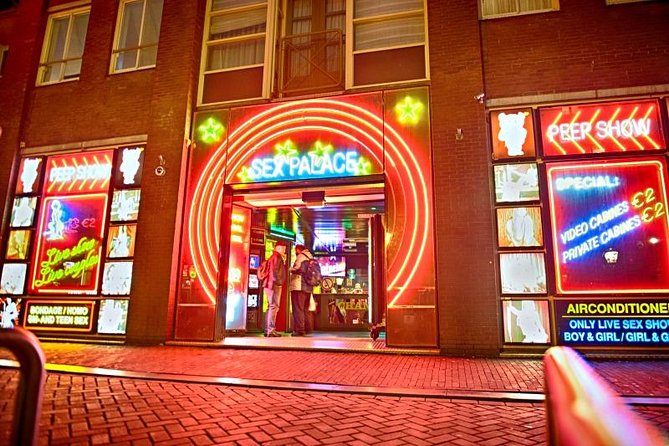
Amsterdam’s Red Light District is more than its famous windows. On this evening walk, you explore some of the city’s oldest streets while hearing how the area’s history connects to its present-day sex industry. I like that the route mixes social history with old-city landmarks, so the neighborhood makes more sense than it would on a quick, unguided stroll.
I also like the chance to hear the area explained by a local guide. Past guides named Ben, Robin, Sander, and Max have been praised for lively stories, useful local tips, and a clear sense of humor. One consideration: this is a walking tour through narrow streets, and icy conditions or limited mobility can make the route harder.
Key things to know before you go
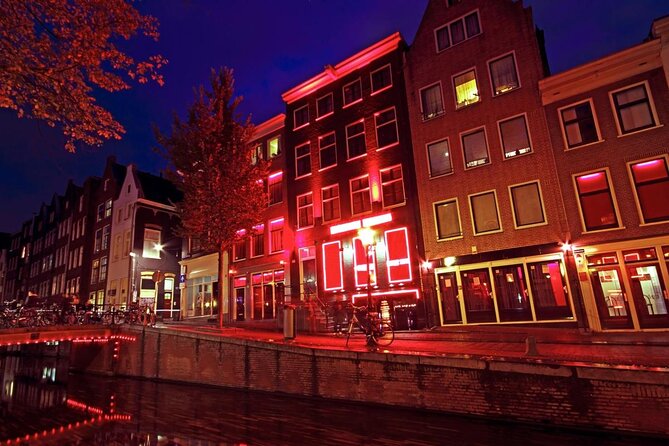
- The route is about more than the red-light windows: Expect local history, architecture, and context about the sex industry.
- Old Amsterdam is underfoot: The walk can include the Waag, once a city gate, and Int Aepjen, one of the city’s few remaining wooden buildings.
- The evening setting changes the mood: You see the neighborhood after dark, when its street life is part of the experience.
- Guide quality can shape the tour: Ben, Robin, Sander, and Max are among the guides named by participants.
- Plan for a full two hours on foot: The tour is listed at about two hours, with one participant reporting a shorter visit of roughly 1 hour and 35 minutes.
- The group can have up to 20 people: That is a manageable cap for a walking tour, though it can affect how easy it is to hear in busy streets.
The Red Light District is also Amsterdam’s Old Town
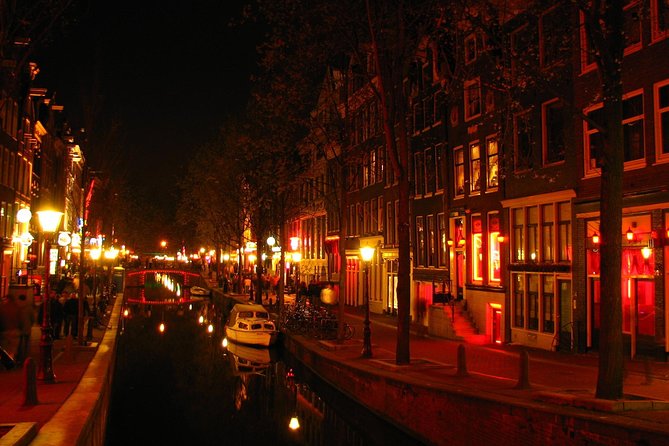
The tour starts at Geldersekade 2 and focuses on the Red Light District, part of Amsterdam’s Old Town. That setting matters: this is not a purpose-built entertainment quarter at the edge of the city, but one of its oldest areas, layered with centuries of trade, civic life, and change.
You walk through tight lanes where the neighborhood’s present-day identity sits alongside old buildings and landmarks. The guide’s role is to connect those pieces. Without context, it is easy to see only the windows and crowds; with a good guide, you can understand how the district fits into the wider story of Amsterdam.
The experience is best approached as a cultural walk, not a promise of access to private businesses or a staged show. The supplied details focus on seeing the streets and learning about the district’s history and current situation. One participant also described visiting a cannabis shop, but that should not be treated as a guaranteed stop.
More Red Light District tours in Amsterdam:
- Amsterdam: Red Light Secrets Museum Entry Ticket
★ 4.2 · 5,722 reviews - Amsterdam: Red Light District Tour in German/English/Italian
★ 4.9 · 5,623 reviews - Amsterdam Red Light District & Coffee Shop Tour
★ 4.6 · 4,134 reviews
Dam Square and a city built on wooden poles
The route includes Dam, where the guide explains a striking fact about Amsterdam’s foundations. Much of the city sits on fen and clay, so buildings were traditionally supported by long wooden piles driven down to a firmer sandy layer about 11 metres below the surface.
That detail helps explain why Amsterdam’s streets and buildings look as they do. The city’s famous old houses are not simply old masonry standing on solid ground. Their foundations tell a story of building on soft, wet land and adapting to it over generations.
Dam is also a useful point to orient yourself. It connects the historic center to the lanes of the Old Town, making it a natural place for a guide to set the scene before the walk turns into narrower streets. The attraction here is not a long stop inside a monument, but the explanation that makes the city around you easier to read.
Int Aepjen, a rare wooden survivor
One of the more unusual stops is Pub The Ape, known in Dutch as Int Aepjen. Built around 1540, it is one of only two wooden buildings left in Amsterdam, a rare survivor in a city where a major fire in 1452 led the authorities to require brick façades.
The story gives you a small but memorable window into how Amsterdam changed its building rules. It also makes a good contrast with the city’s many brick-fronted houses: here is a piece of the older streetscape that escaped the shift.
This is the kind of detail I value on a walking tour. You may pass a building on your own and notice its age, but a guide can explain why it is unusual and what happened to the rest. The stop is brief, but it gives the route a concrete link to the city’s past.
The Waag and the old city defenses
The Waag began as one of Amsterdam’s city gates, part of the defensive wall, and dates to around the 1400s. It is described as the city’s second-oldest building. In later years, guilds, or groups of craftspeople, used the building and the square around it.
The Waag is a useful reminder that the Red Light District’s history is not limited to one subject. The area has served practical civic roles as well as commercial ones. As you walk, the guide can help you connect the old defensive edge of the city with the busy streets that grew around it.
The building’s changing use also gives you a sense of how urban life evolves. A former gate becomes a place for trades and organizations; a square once tied to the city wall becomes part of a modern neighborhood. You do not need a long lecture to appreciate that shift, but a few well-told facts make the stop more than a photo opportunity.
A few more Amsterdam options worth a look
- Amsterdam: Van Gogh Museum Ticket
★ 4.7 · 52,054 reviews - Amsterdam Classic Saloon Boat Cruise with Drinks and Cheese
★ 5.0 · 31,825 reviews - Amsterdam Luxury Canal Cruise + Unlimited Drinks & Bites option
★ 5.0 · 30,518 reviews - Amsterdam: Heineken Experience Ticket
★ 4.6 · 30,055 reviews
The narrow house and a trading company’s past
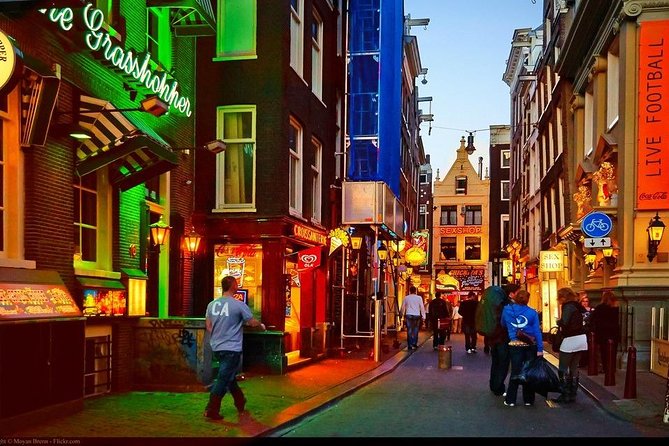
The route may also pass Amsterdam’s smallest house, built around the 1700s. It first served as a storage place for the Dutch East India Company, known by its Dutch initials VOC, and later became a home where people lived for a long time.
The building is a compact reminder of how valuable space was in a crowded trading city. Its story moves from commerce to domestic life, and that change helps make the old center feel inhabited rather than frozen in time.
As with the other stops, the appeal is partly in the contrast. The Red Light District is often reduced to one modern image, but the small house points to a much older pattern of work, housing, and trade. You get a quick architectural detail without spending the whole evening inside a museum.
A condom shop and candid discussion of the district
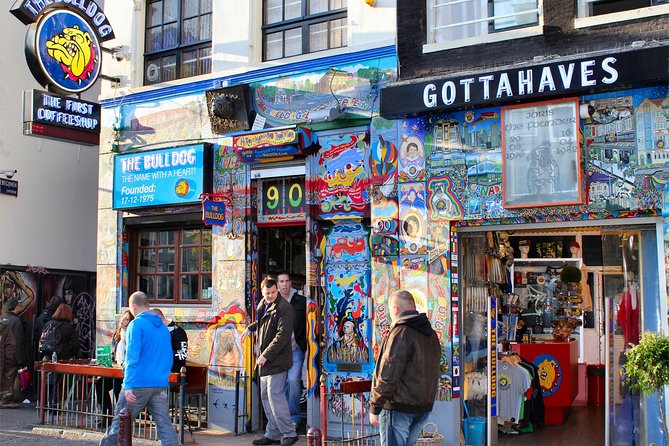
A more contemporary stop is the world’s first shop devoted to condoms, which has been at this location since 1987. It sells a range of products, including custom-sized condoms. The stop may prompt discussion of how Amsterdam approaches sex and sexual health, rather than treating the subject as a secret or a punchline.
The tour’s treatment of the district is one reason to choose a guide instead of simply walking through on your own. A good explanation can separate the area’s history from its present-day reputation and give you a clearer sense of local customs. The route is not described as entirely focused on the sex industry. One participant estimated that this subject made up about 15 percent of their tour, with the rest covering wider city history and other topics.
That balance may suit you if you want context without making the entire evening about the red-light trade. If you want a tour devoted exclusively to the sex industry, check the details with the operator before booking.
What the guide can add
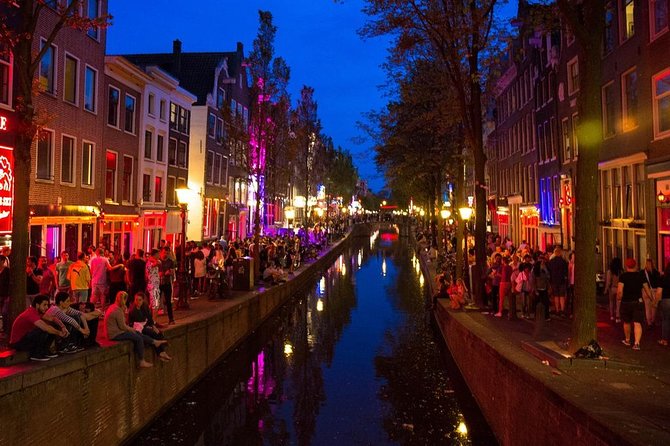
The strongest feature of this experience is the guide’s storytelling. Ben has been praised for bringing Amsterdam’s past to life; Robin for combining local tips and an easy manner; Sander for sharing the city’s history; and Max for humor and broad coverage beyond the district itself.
Those names are useful, but they do not guarantee who will lead your departure. What you should look for is a guide who can speak clearly, keep the group together, and explain sensitive topics with respect. The walking route passes through public streets, where noise and crowds can make it harder to hear. One participant found the guide difficult to hear when he walked ahead, so it is sensible to stay close and speak up if you are falling behind.
The tour can include up to 20 people. That cap keeps the group from becoming enormous, but it is not a private walk. If you prefer a quieter experience, you may want to ask about group size for your chosen date.
After dark, with a few practical trade-offs
The tour is designed for after dark, when you can see a different side of the city. That setting gives the walk its particular character, but it also means weather matters. An icy street can make narrow lanes difficult to manage, especially if you have mobility limitations or are uncomfortable walking on slippery ground.
Wear shoes suited to two hours on foot, and check the weather before setting out. The operator does not provide food or drinks, so have a meal beforehand or plan one for afterward. The meeting point is Geldersekade 2, and the tour ends back there.
A past participant described an 18:00 departure as more family-friendly for a 17-year-old, while recommending a later departure for adults. That is a personal judgment, not a firm age rule, but it is a helpful prompt: if you are considering the tour with a teenager, check the departure time and ask the operator what to expect.
Is $31.32 good value?
At $31.32 per person, the price is reasonable if you value a guide’s local context and want a compact introduction to the area. You are paying for about two hours of walking and explanation, not admissions, food, or drinks. The listed stops are viewed from the street, and there is no separate admission ticket for the walk.
The value depends heavily on the guide. With a lively guide, you get history, neighborhood customs, and details you might miss while wandering alone. With a guide who is hard to hear or does not keep the group together, the same route can feel less worthwhile. The strong praise for guides such as Ben, Robin, Sander, and Max suggests the storytelling can be a real asset, while one poor experience shows that the quality is not guaranteed.
The tour is booked, on average, 47 days ahead. That does not mean every date sells out, but it is a useful sign to plan early if you have a particular evening in mind. Free cancellation is available up to 24 hours before the start time; cancellations or changes inside that window are not accepted for a refund.
Who should book this walk?
I would choose this tour if it is your first time in Amsterdam and you want a more thoughtful introduction to the Red Light District than a self-guided pass through its main streets. It is especially useful if you enjoy architecture and social history, or if you want a local guide to explain the area without making the whole walk about one subject.
It may be less suitable if you have limited mobility, are uncomfortable walking on narrow or icy streets, or want a very small, private group. The maximum group size is 20, and the route is on foot. If you are sensitive to adult themes, ask about the timing and tone of the departure you plan to book.
For most visitors who are curious about the neighborhood and comfortable with a two-hour walk, this is a practical way to get context, see several historic details, and leave with a better grasp of how old Amsterdam and modern street life overlap.
FAQ
How long is the tour?
It is listed as approximately two hours. One participant described a tour lasting about 1 hour and 35 minutes, so the actual duration may vary.
Where does the tour start?
The meeting point is Geldersekade 2, 1012 BH Amsterdam, Netherlands.
Where does the tour end?
It ends back at the meeting point.
What language is the tour offered in?
The tour is offered in English.
How much does it cost?
The listed price is $31.32 per person.
Is food or drink included?
No. Food and drinks are not included.
How large can the group be?
The tour has a maximum of 20 participants.
Is the tour suitable for someone with limited mobility?
It is not recommended for travelers with limited mobility. The experience involves walking through narrow streets.
Can I cancel for a refund?
Yes. You can cancel at least 24 hours before the start time for a full refund. Cancellations or changes made less than 24 hours before the start time are not accepted for a refund.
Added lately in Amsterdam
- Nemo Science Museum Admission★ 5.0 · 4 reviews
- Off the Beaten Paths Dutch Landscape Private Tour 1/2 day Jaguar★ 5.0 · 10 reviews
- Northern Highlights Tour: visit 4 magnificent places from Amsterdam★ 5.0 · 5 reviews
- Off the beaten paths Dutch Country Side Private Tour in Jaguar★ 5.0 · 5 reviews
- From Amsterdam: Day Trip to Rotterdam, Delft & Hague with Cruise★ 3.0 · 15 reviews
- Amsterdam : Keukenhof FlowerFarm Privatetour Skip-The-Line ticket★ 5.0 · 33 reviews
- NEMO Science Museum Amsterdam Admission Ticket★ 4.5 · 36 reviews
- Amsterdam Light Festival: Canal Cruise + Bite & Unlimited Drinks★ 4.5 · 20 reviews
Amsterdam Red Light District Tours, compared.
Red Light District Tour in German/English/Italian
Read our review →
Amsterdam Red Light District & Coffee Shop Tour
Read our review →
Red Light District Pub Crawl with Unlimited Shots
Read our review →
Browse the lists this tour appears in