
Reviewed · AMSTERDAM JEWISH HISTORY TOURS
Amsterdam in World War II Tour
Amsterdam’s wartime story comes into focus on its ordinary streets: a former post office where Dutch workers were executed, a square marked by a deadly shooting after Germany’s surrender, and the building where Dutch officials welcomed German troops. This small-group walk links those places to the occupation of 1940 to 1945.
I like two things in particular: the guides are retired historians, including Peter and Ben, and the group is capped at eight, which leaves room for questions. I also like that the tour uses period photos and maps to help you picture a city that has changed.
One important limit: you stop outside Anne Frank House, but do not enter the museum. If you want to see the Secret Annex, you’ll need a separate ticket and visit.
- Start at Anne Frank House: Hear about the German attack and Jewish refugees before walking on.
- See wartime landmarks in context: Stops include Magna Plaza, Nieuwe Kerk, Dam Square, and the former city hall.
- Follow several strands of history: The walk covers Jewish heritage, occupation, resistance, military events, and remembrance.
- Expect a small group: No more than eight people join, according to the tour details.
- Walk at an unhurried pace: The tour takes about three hours, sometimes closer to three and a half.
- Finish at the National Holocaust Names Monument: The route ends near the Portuguese Synagogue and the city hall.
Amsterdam’s wartime story starts outside Anne Frank House
The tour begins at Prinsengracht 263, outside Anne Frank House, at 9:30 am. That location gives the guide a direct way into the story of Germany’s attack on the Netherlands and the Jewish refugees who came to Amsterdam. You’ll hear about Anne Frank’s story, but this is a street tour, not a museum visit.
That distinction matters. The building is a powerful place to begin, but you won’t see the rooms where Anne and her family hid. If visiting the museum is important to you, plan that separately. The walking tour is better understood as a wider account of occupation and persecution, with Anne Frank’s story as one part of it.
From there, the route connects sites across the city to the events that took place around them. This is the tour’s main strength: Amsterdam is not treated as a collection of plaques. Your guide links streets, buildings, and public spaces to decisions and human consequences from the occupation.
Period photos make the past easier to picture
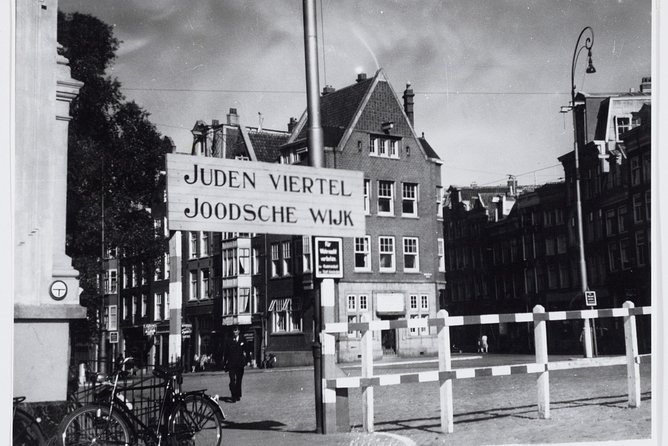
The tour is led by one of three retired historians with a particular interest in the German occupation of the Netherlands. Peter and Ben are named among the guides. Their approach, as described by people who took the walk, includes period photographs, maps, and other historical material. Some guides have also brought log books or copies to share.
These visual aids are useful because the city has changed since the war. A photograph can show you what stood in a place before you, while the guide explains how that location figured in the occupation. You’re not simply asked to imagine a different Amsterdam from a modern street corner.
The small group limit of eight also suits a subject that calls for questions and careful listening. The guide can keep the group close and give people room to ask about details. The pace is described as slow, with the aim of keeping everyone together. If you like to stop and think rather than march from one landmark to the next, that rhythm should suit you.
More Jewish history tours in Amsterdam:
- Amsterdam: Life of Anne Frank and World War II Walking Tour
★ 4.8 · 10,467 reviews - Anne Frank Walking Tour Amsterdam Including Jewish Cultural Quarter
★ 5.0 · 1,879 reviews - Amsterdam: Dutch WWII Resistance Museum Entry Ticket
★ 4.7 · 951 reviews
The route links old streets to wartime change
One stop is the Statue of Multatuli, on Raadhuisstraat and the bridge over the Singel. Here, the guide discusses how Amsterdam changed in the years after World War II. It’s a reminder that the war did not end neatly when the fighting stopped. The city and its residents carried the effects of occupation into the years that followed.
This is a short stop, about ten minutes, so don’t expect a long discussion of postwar Amsterdam at this point. Instead, it helps frame the route: the streets you see today are not a frozen picture of wartime life. The city changed, and the walk uses those changes to make its history more legible.
Magna Plaza offers a sharper example of a familiar building taking on a new role. Today it is a shopping mall; during the war it was Amsterdam’s post office. The guide tells the story of Dutch postmen executed by the Germans. It’s a brief stop, but a sobering one. The contrast between a present-day commercial building and the violence tied to its wartime past is hard to miss.
Nieuwe Kerk and Dam Square hold different kinds of memory
Near Nieuwe Kerk, the guide points out Mozes en Aäronstraat, the street between the Royal Palace and the New Church. The stop is short, around five minutes, but it adds another story to the walk’s account of Amsterdam under occupation. Rather than being a museum visit, it’s a chance to read the city through its street names and geography.
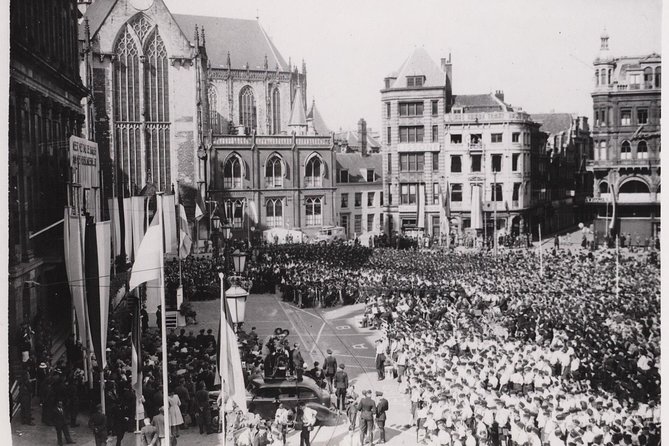
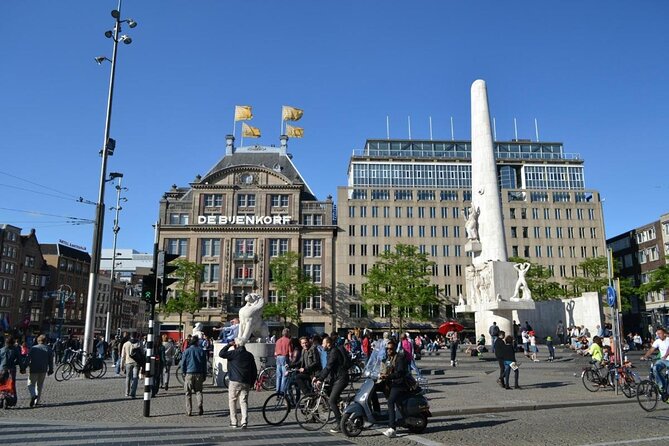
Dam Square gets more time, about 25 minutes, and for good reason. It is the heart of Amsterdam, and several wartime and postwar events meet here. The guide covers the shooting on May 7, 1945, two days after the German surrender. The surrender had not made every street safe; this event gives the end of the occupation a more complicated shape than a simple moment of relief.
The square also connects to the recruitment of Dutch volunteers for the so-called crusade against Bolshevism. The tour discusses May 4 remembrance and the World War II monument. Together, those topics make Dam Square more than a central meeting place. It becomes a setting for the choices, losses, and public memory that shaped the Netherlands during and after the war.
Because the square is open and busy, it may not feel like a quiet memorial space. That’s part of the point: history sits in the middle of daily city life. Your guide helps you notice what you might otherwise pass without a thought.
A former city hall tells a story of surrender
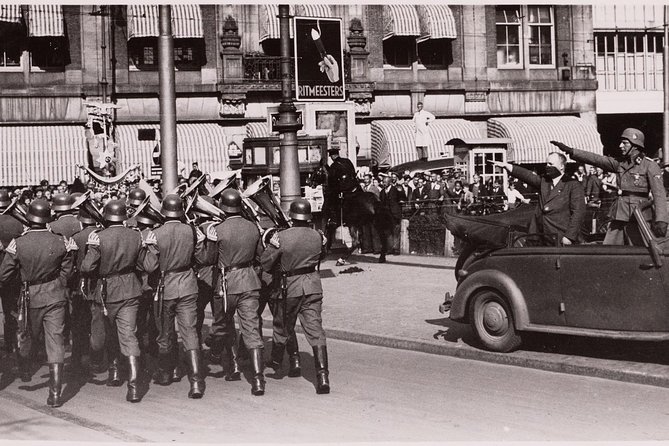
The route also stops at Sofitel Legend The Grand Amsterdam, which served as city hall during World War II. Dutch civil servants welcomed German troops there on May 15, 1940. The detail adds a civic and political dimension to the walk: the occupation was not only a story of armies and victims, but also of how local institutions and officials responded.
This stop lasts around five minutes, so it is a concise piece of the larger narrative rather than a full account of wartime government. Still, the location makes the subject concrete. A grand civic building can hold a story of accommodation, pressure, and the difficult choices made under occupation.
A few more Amsterdam options worth a look
- Amsterdam: Van Gogh Museum Ticket
★ 4.7 · 52,054 reviews - Amsterdam Classic Saloon Boat Cruise with Drinks and Cheese
★ 5.0 · 31,825 reviews - Amsterdam Luxury Canal Cruise + Unlimited Drinks & Bites option
★ 5.0 · 30,518 reviews - Amsterdam: Heineken Experience Ticket
★ 4.6 · 30,055 reviews
The final stop brings the route to remembrance
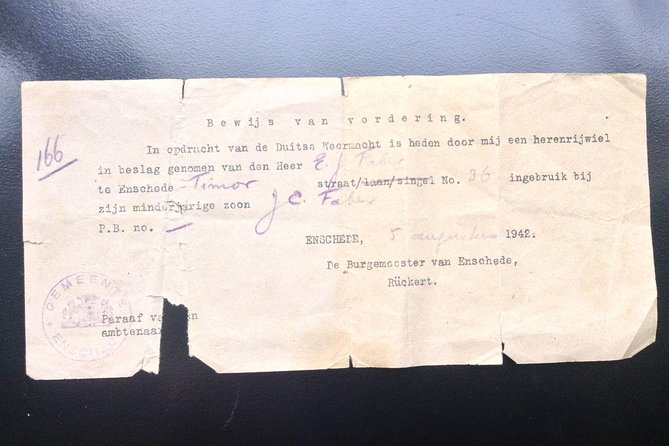
The walk ends at the National Holocaust Names Monument, near the Portuguese Synagogue and not far from the city hall. The endpoint gives the route a clear focus on the people persecuted and killed during the Holocaust. After several stops that place wartime events in the fabric of the city, ending at a memorial makes space for remembrance.
The walk is likely to feel emotionally weighty. It covers persecution, executions, and the suffering of Jewish people, alongside the choices and actions of Dutch institutions and residents. One guide has also been praised for balancing the serious subject with other details about Amsterdam as the group walks. That approach can give you breathing room without diminishing the gravity of the history.
Three hours on foot is enough to ask questions
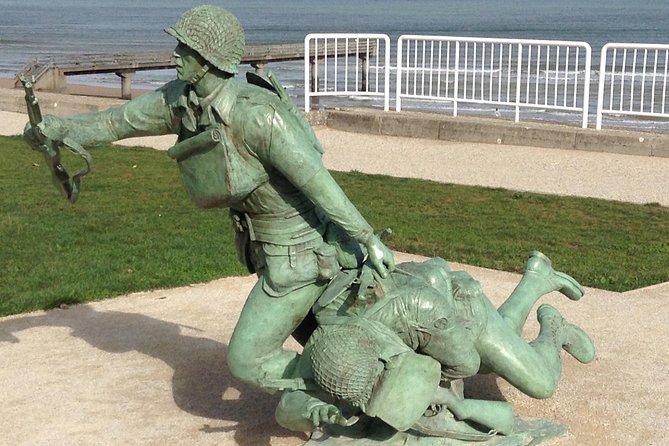
The stated duration is about three hours, though the walk can run to three and a half. The pace is slow, and the route is on foot. Private transportation is not included, and there is no coffee or tea included, though a coffee break has been part of some walks. Bring a warm layer or rain protection if the forecast calls for it, since the tour requires suitable weather and takes place outdoors.
The start and end points are different. You meet outside Anne Frank House on Prinsengracht and finish at the National Holocaust Names Monument. The tour is near public transportation, but the supplied details don’t specify a particular route or station, so check your own map before setting off.
At $46.44 per person, the value depends on how much you want a guided historical account. You’re paying for a specialist-led walk with period material, a small group, and a route that ties several sites together. The price does not include museum admission, drinks, or transport. For someone who wants context and conversation rather than a quick list of landmarks, that is a fair trade.
The tour is recommended by 98 percent of participants and has a 4.9 rating from 63 reviews. The praise centers most strongly on the guides’ subject expertise, their use of photos and maps, and the unhurried pace. Those are the qualities that matter most here: the subject is too complex for a brisk pass-by, and a good guide can help you connect the details without reducing them to dates and names.
Who should book this walk
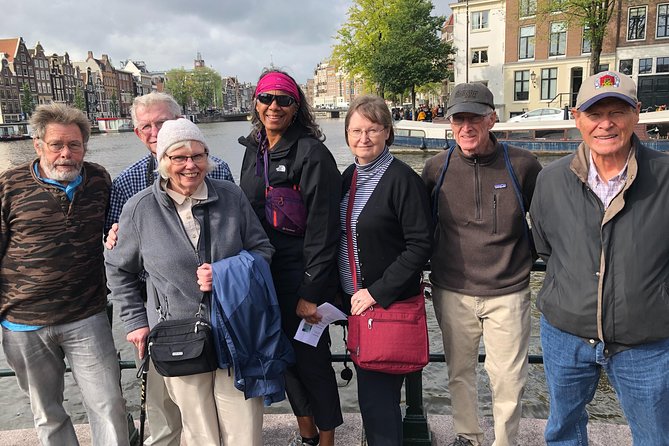
I’d choose this tour if you want to understand Amsterdam’s occupation beyond the story of Anne Frank alone. It gives you a broader frame, including Jewish history, resistance, collaboration, public memory, and events at the end of the war. History fans will get the most from it, but you don’t need specialist knowledge to follow the route.
It’s also a good fit if you prefer small groups and time to ask questions. The slow pace can help if you don’t want a rushed walk, though the tour still lasts three hours or more and involves being on your feet. If you want to enter Anne Frank House, see a museum collection, or spend more time at each site, this is not a substitute. Book it for the guided street history, and arrange museum visits separately.
The tour has free cancellation up to 24 hours before its start. Cancellations closer to the start are not refunded, and poor weather or too few bookings may lead to a different date or a refund. It is available to most participants, and service animals are allowed.
FAQ

How long is the Amsterdam in World War II Tour?
It lasts about three hours, though some walks take three and a half hours.
What time does the tour start?
The start time is 9:30 am.
Where does the tour begin?
It begins outside Anne Frank House at Prinsengracht 263, Amsterdam.
Does the tour enter Anne Frank House?
No. The guide tells the story outside the house, but museum admission is not included.
Where does the tour end?
It ends at the National Holocaust Names Monument, near the Portuguese Synagogue and not far from the city hall.
How many people can join?
The tour has a maximum group size of eight.
Who leads the tour?
It is led by one of three retired historians. Peter and Ben are among the named guides.
What is included in the price?
The price includes a guided tour. Coffee, tea, and private transportation are not included.
How much does the tour cost?
The listed price is $46.44 per person.
Can I cancel for a refund?
You can cancel at least 24 hours before the start for a full refund. Cancellations made less than 24 hours before the start are not refunded.
Added lately in Amsterdam
- Nemo Science Museum Admission★ 5.0 · 4 reviews
- Off the Beaten Paths Dutch Landscape Private Tour 1/2 day Jaguar★ 5.0 · 10 reviews
- Northern Highlights Tour: visit 4 magnificent places from Amsterdam★ 5.0 · 5 reviews
- Off the beaten paths Dutch Country Side Private Tour in Jaguar★ 5.0 · 5 reviews
- From Amsterdam: Day Trip to Rotterdam, Delft & Hague with Cruise★ 3.0 · 15 reviews
- Amsterdam : Keukenhof FlowerFarm Privatetour Skip-The-Line ticket★ 5.0 · 33 reviews
- NEMO Science Museum Amsterdam Admission Ticket★ 4.5 · 36 reviews
- Amsterdam Light Festival: Canal Cruise + Bite & Unlimited Drinks★ 4.5 · 20 reviews
Amsterdam Jewish History Tours, compared.
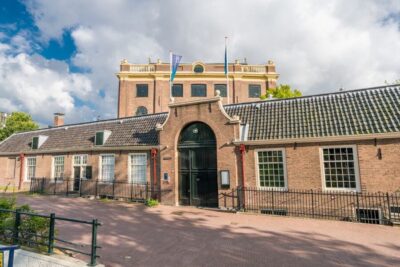
Life of Anne Frank and World War II Walking Tour
Read our review →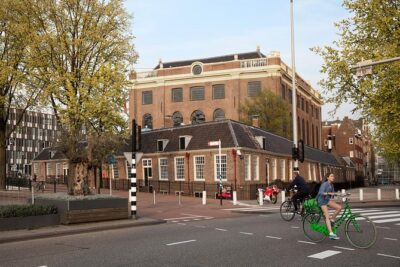
Anne Frank Walking Tour Amsterdam Including Jewish Cultural Quarter
Read our review →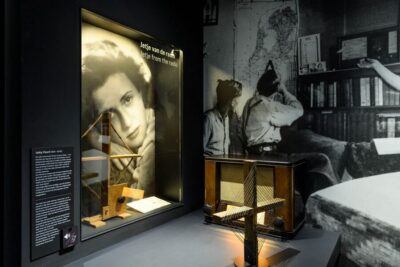
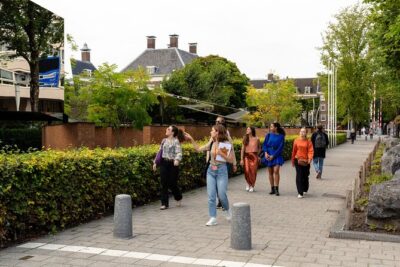
Anne Frank and Jewish Quarter Amsterdam Private Walking Tour
Read our review →
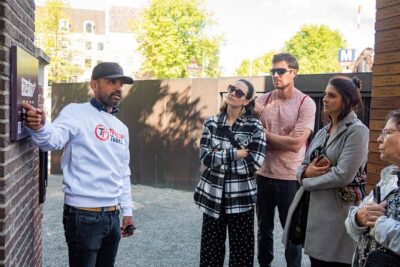
Anne Frank and Jewish Quarter Walking Tour (TOP RATED)
Read our review →
Browse the lists this tour appears in